 Pin It
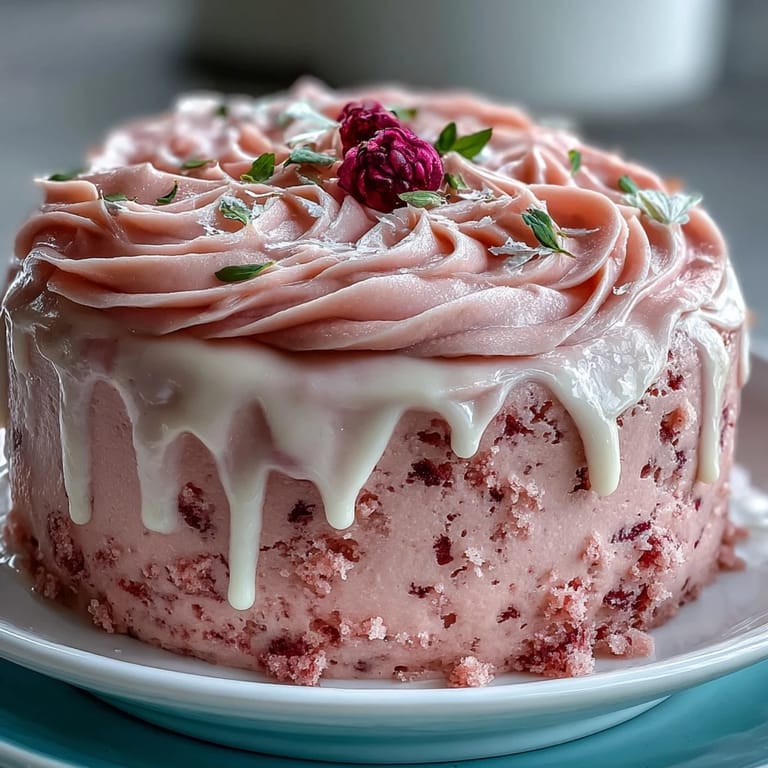
 The first time I made this Rosé Velvet Cake, the kitchen filled with the uplifting scent of summer berries and soft vanilla. It wasn’t a grand event—just a spontaneous baking afternoon with the window cracked open and sunlight sneaking in while I sampled little spoonfuls of cake batter tinted the prettiest pink. There’s something delightfully playful about drizzling edible gold down a cake and watching it shimmer in the light, even if I got more on my fingers than the cake itself. No matter how many times I make it, that first taste—airy crumb and creamy frosting—always feels like a little celebration. This dessert is a showstopper, but never asks you to be perfect.
One afternoon before my cousin’s bridal shower, I played with decorating the cake in the middle of a counter crowded with bouquets and someone humming along to 90s pop. The laughter in the kitchen, punctuated by frantic stacking and frosting touch-ups, made the whole process feel less like catering and more like a mini party. At one point, I nearly dropped a layer—but the slightly askew cake was still devoured with cheers and a few happy tears. Cakes like this turn a simple gathering into a memory worth keeping. I learned that uneven gold drips have a way of starting conversations.
Ingredients
- All-purpose flour: Gives the cake structure and softness—sift it for the fluffiest crumb.
- Cornstarch: My trick for a velvet-textured cake, learned after some denser early attempts.
- Unsweetened cocoa powder: Just enough for depth, not darkness; Dutch-process gives a smooth finish.
- Baking soda: Ensures the layers lift evenly—always double-check yours isn’t past its date.
- Salt: Brings all the flavors together, so don’t skip or skimp.
- Unsalted butter: Room temperature is key for even mixing; patience here pays off in a tender crumb.
- Granulated sugar: Classic sweetness, but gives structure too—beat it long enough for airiness.
- Light brown sugar: A tiny touch of caramel warmth balances the brighter notes from the wine.
- Large eggs: Add richness and bind the batter—crack one at a time or risk shell fragments.
- Rosé wine: Choose something fruity, not flashy; the flavor lingers without overpowering.
- Buttermilk: Key to that velvet crumb—I learned not to swap for regular milk in a pinch.
- Vanilla extract: The base layer of flavor, always best real but a good imitation will do.
- Pink gel food coloring (optional): If you want a brighter blush, just a tiny dab does it—too much looks cartoonish.
- Cream cheese: Let it come all the way to room temp for the silkiest frosting.
- More unsalted butter (for frosting): Ensures spreadability and a bit of structure, especially when it’s warm in the kitchen.
- Confectioners' sugar: Sift it or you’ll chase lumps across your frosting forever.
- More vanilla extract and salt (for frosting): Balances the sweetness, essential for a tangy, dreamy finish.
- White chocolate chips: Melt smoothly for the drip; chips are much tidier than blocks.
- Heavy cream: The secret to a silky ganache—don’t try to cheat with milk.
- Edible gold luster dust: Look for the brightest shade at baking supply stores; a little goes a long way.
- Vodka or lemon extract: Mixes with luster dust to make edible paint—vodka evaporates for a smooth finish.
- Edible flowers or gold leaf (optional): Sprinkled on top, they make everyone pause for photos.
Tired of Takeout? 🥡
Get 10 meals you can make faster than delivery arrives. Seriously.
One email. No spam. Unsubscribe anytime.
Instructions
- Prepare the pans:
- Grease and line three 8-inch round cake pans so your layers come out without tears or lost crumbs.
- Mix dry ingredients:
- Sift together the flour, cornstarch, cocoa, baking soda, and salt; your kitchen will be dusted with flour clouds, but it’s worth it for a light cake.
- Cream the butter and sugars:
- Beat until pale and fluffy, about three minutes, and let the sound of the mixer set a happy rhythm.
- Add eggs and vanilla:
- Add the eggs one by one, mixing well after each, then stir in vanilla for a lovely scent explosion.
- Mix wet ingredients:
- In a jug, combine rosé wine and buttermilk; this blend gives the cake a subtle, slightly floral lift.
- Combine batter:
- With mixer on low, alternate adding dry and wet mixtures, starting and finishing with dry; add pink color last, watching to see the right shade bloom in the bowl.
- Divide and bake:
- Portion batter into pans, gently smooth the tops, and bake for around thirty minutes, or until the kitchen smells like celebration.
- Cool the cakes:
- Let layers cool in pans briefly, then turn onto a wire rack; don’t rush unless you want sticky bottoms.
- Make frosting:
- Beat cream cheese and butter until dreamy, then add sugar slowly—pausing to scrape the sides, so it stays cloudlike.
- Assemble the cake:
- Spread frosting between layers and around the sides; use an offset spatula as your magic wand, then chill for thirty minutes before finishing touches.
- Gold drip:
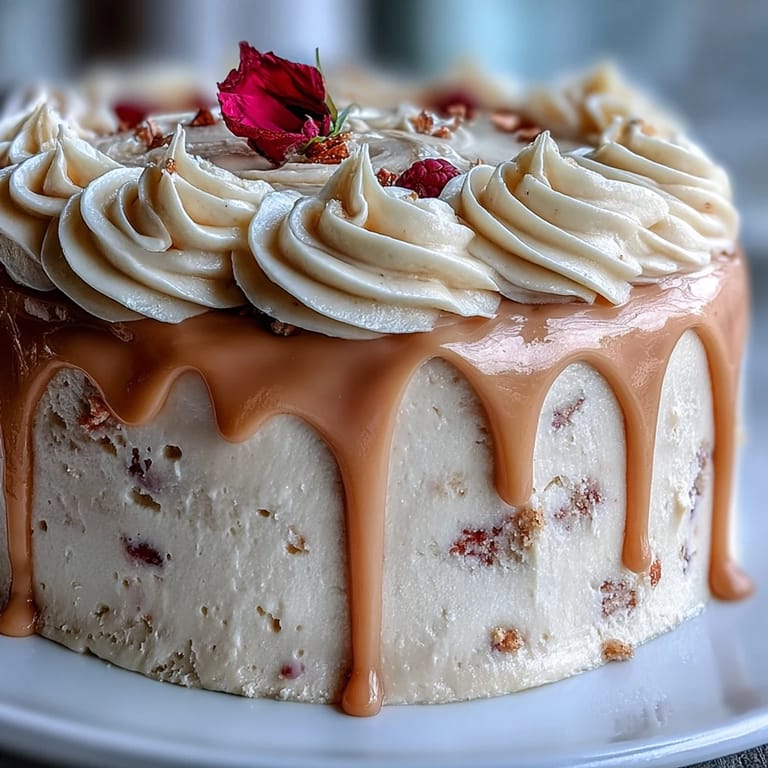
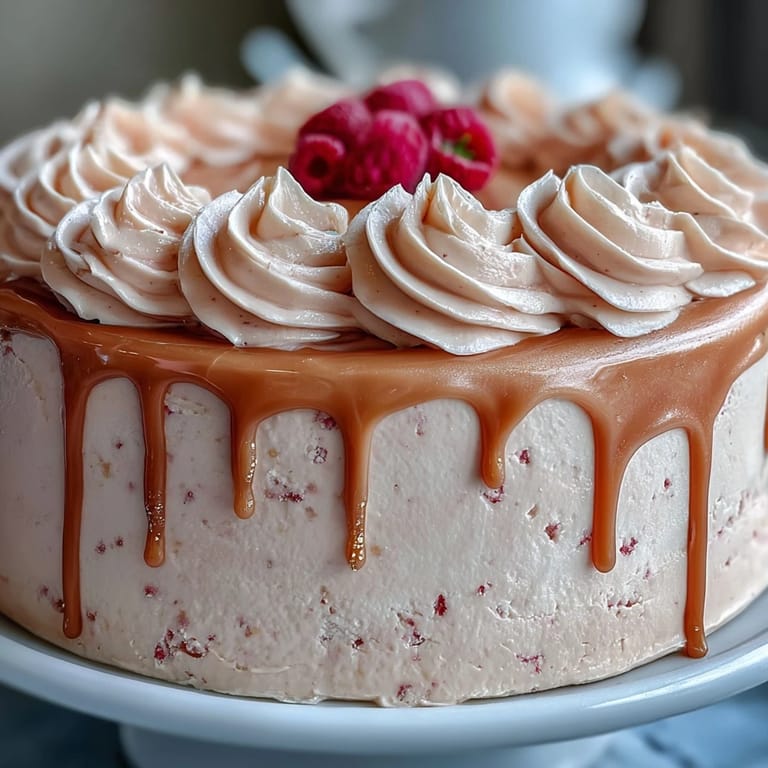
- Gently melt white chocolate and heavy cream together, let cool a moment, then spoon drips over chilled cake edges—the best part might be watching them set.
- Paint it gold:
- Mix luster dust and vodka to a thick paint, then brush onto drips for that regal party effect; your inner artist can go wild here.
- Final flourishes:
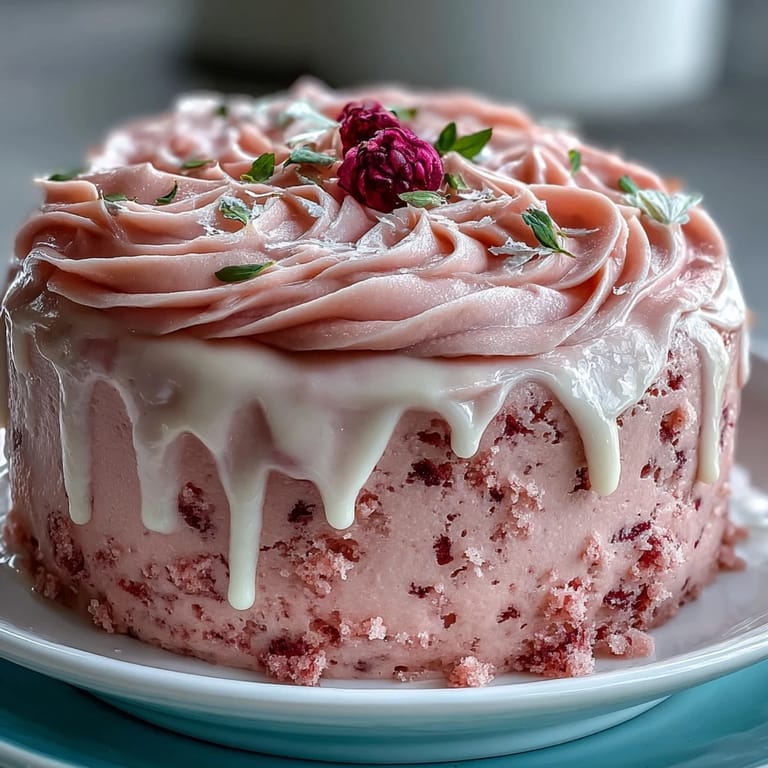
- Finish with edible flowers, berries, or gold leaf if you want even more dazzle—step back and admire before slicing.
 Pin It
  Pin It
 Sometime after I started baking this cake for celebrations, one quiet slice eaten with someone I love in the kitchen felt far more special than any crowd’s applause. When everyone else was gone and the last crumbs were left, sharing it over tea made even a Monday feel bright and golden. Sometimes the best part isn’t the big reveal, but the little moments of joy that come after.
How to Get the Perfect Pink Hue
The right color felt elusive until I tried using just a toothpick’s swirl of gel food coloring and mixed gently, watching for a soft blush instead of a neon pop. If your cake batter is looking too pale, add a touch more, but stop just before you think you need it—that rosy, understated glow bakes into a gorgeous color. Hold your bowl up to the window light if you’re unsure; natural light is best for judging shade.
My Tricks for a Silky Cream Cheese Frosting
Letting the cream cheese and butter come fully to room temperature means no lumps and a much smoother spread. I always sift the confectioners' sugar and add it in smaller portions—it prevents a poof of sugar mist and gives more control over the final fluffiness. Don’t skip scraping down your bowl as you go, either, so everything’s as even and cloud-like as possible.
Decorating Like a Pro, Minus the Stress
If gold drips make you nervous, remember that even uneven ones look elegant once you add edible blooms or berries—you’re creating a mood, not perfection. Use a small spoon for drip control, and if you overdo it, just wipe away with a damp (clean!) finger before the chocolate sets.
- Chill the cake well before painting on gold for crisp results.
- Stir the luster dust paint frequently so it doesn’t pool or streak.
- Have fun with your decorations—it’s a party cake, not an exam!
 Pin It
  Pin It
 I hope your kitchen feels full of laughter and gold-sprinkled magic whenever you make this cake. Here’s to sweet moments that sparkle in memory, even after the last slice disappears.
Recipe Questions & Answers
- → Can I make this without alcohol?
Yes. Substitute rosé with pink grape juice or sparkling cider in equal volume. The juice keeps moisture and flavor; if sweeter, reduce a tablespoon of sugar in the batter to balance.
- → How do I get a natural pink hue?
Use a small amount of concentrated beet juice or beet powder for natural color, adding sparingly until you reach the desired blush. Gel food coloring gives a more consistent, vivid pink with a few drops.
- → How can I keep the cream cheese frosting stable?
Use cold, full-fat cream cheese and room-temperature butter, beat until just smooth, then chill before spreading. Avoid overbeating and refrigerate the frosted cake to firm the frosting before decorating.
- → What's the best way to achieve a clean gold drip?
Warm white chocolate and cream gently for a glossy ganache; cool slightly so it holds shape but still flows. Test drips on a chilled cake edge, then brush dried drips with reconstituted gold luster dust mixed with a clear spirit or lemon extract.
- → Tips for leveling and stacking the layers?
Chill baked layers completely before slicing. Use a serrated knife or cake leveler to remove domes, apply a thin crumb coat, chill, then add final frosting layers for smooth edges.
- → How should I store or make this ahead?
Assemble and chill the cake up to 2–3 days refrigerated. For longer storage, freeze unfrosted layers wrapped tightly for up to a month; thaw in the refrigerator before assembling and decorating.