 Pin It
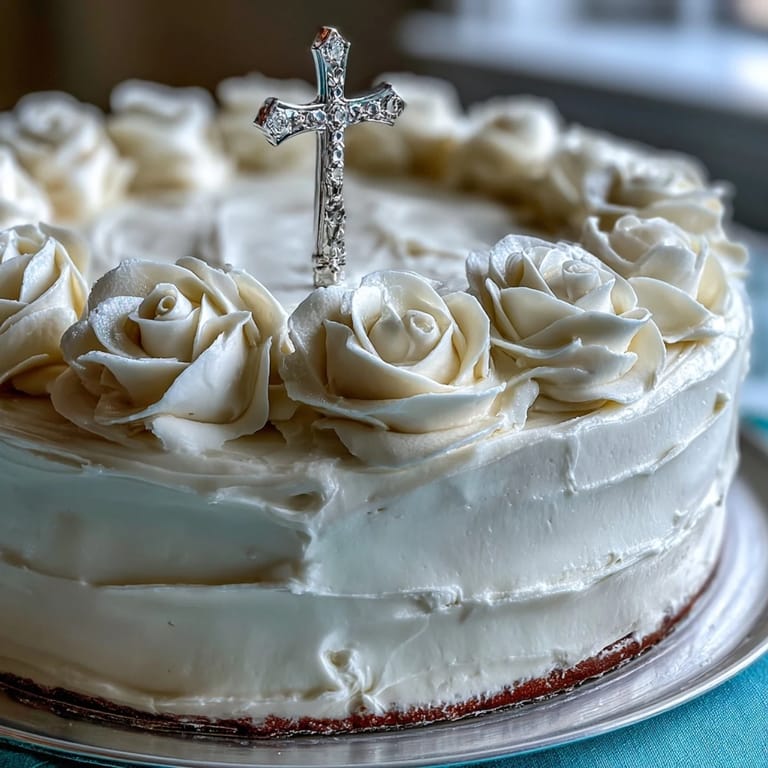
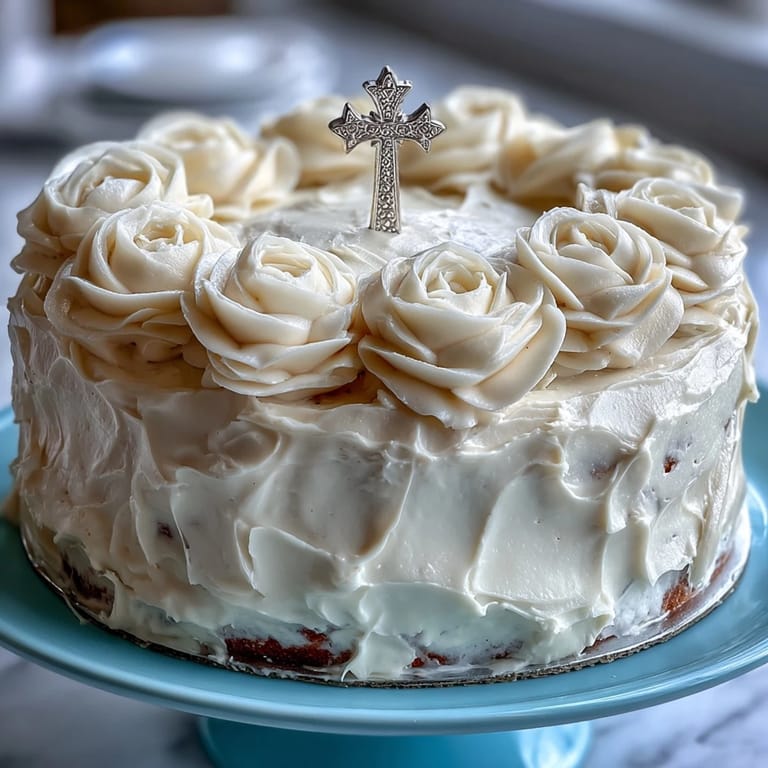
 My cousin asked me to bake her daughter's First Communion cake three years ago, and I'll never forget the nervous energy in my kitchen that morning. The girl had picked white roses and a little cross topper, and suddenly this wasn't just a cake—it was a milestone wrapped in buttercream and fondant. I'd made plenty of layer cakes before, but there's something about a cake meant to celebrate faith and growing up that makes you slow down and pay attention to every detail.
When I pulled those first two cake layers out of the oven, the smell was pure vanilla—nothing fancy, nothing trendy, just honest and warm. My sister walked in midway through decorating and said the cake looked like something from a fancy bakery, which meant everything because she's my toughest critic. That's when I knew this recipe worked: not because it was complicated, but because it felt special without requiring any shortcuts or substitutions.
Ingredients
- All-purpose flour (2 ½ cups): You want a standard cake flour weight here; scooping and leveling matters more than you'd think because too much flour makes the cake dense and dry.
- Baking powder (2 ½ tsp): This is your lift and airiness—don't skip it or reduce it, or you'll end up with a dense, heavy cake that won't feel celebratory.
- Unsalted butter (1 cup for sponge, 1 ½ cups for frosting): Room temperature butter creams properly and incorporates air; cold butter will give you a lumpy, sad frosting.
- Granulated sugar (2 cups): This sweetens and also helps create structure, so measure it accurately and don't try to cut back thinking it'll be less sweet.
- Eggs (4 large, room temperature): Room temperature eggs emulsify better with the butter and create a smoother, more tender crumb.
- Pure vanilla extract (1 tbsp for sponge, 2 tsp for frosting): This is what makes people stop eating and ask what flavor that is—use real vanilla, never the imitation stuff.
- Whole milk (1 cup, room temperature): Alternating wet and dry keeps the batter from becoming overmixed, which would make the cake tough.
- Powdered sugar (5 cups, sifted): Sifting removes lumps and gives you a smooth frosting without any grainy texture that would ruin your cake's finish.
- White fondant (16 oz): This is your canvas for roses and leaves; buy quality fondant or make your own if you're comfortable, because cheap fondant cracks and won't shape nicely.
- Cross topper: Whether edible or decorative, this becomes the focal point, so choose one that feels right for the occasion.
Tired of Takeout? 🥡
Get 10 meals you can make faster than delivery arrives. Seriously.
One email. No spam. Unsubscribe anytime.
Instructions
- Set yourself up for success:
- Preheat your oven to 350°F and grease those two 8-inch pans with butter or cooking spray, then line the bottoms with parchment paper so the cakes slip out without sticking. Having everything ready before you start mixing means you won't be scrambling when the batter's ready to go into the oven.
- Build the dry foundation:
- Whisk together flour, baking powder, and salt in a medium bowl, breaking up any lumps so everything distributes evenly through the batter. This step takes two minutes and prevents streaks of baking powder that would taste bitter.
- Cream butter and sugar until fluffy:
- Beat softened butter and sugar for about 3 minutes until the mixture looks pale and fluffy, like whipped clouds. You're incorporating air here, which is what makes the cake light and tender rather than dense.
- Add eggs one by one:
- Drop in each egg individually and beat well before adding the next one; this ensures they emulsify into the butter mixture instead of making the batter look curdled and broken. Once you add all four, mix in the vanilla extract and feel how the batter smells richer.
- Alternate wet and dry carefully:
- On low speed, add about a third of the flour mixture, then a third of the milk, then another third of flour, milk, and the final flour portion. This prevents overmixing, which would develop gluten and make your cake tough and rubbery.
- Bake with patience:
- Divide the batter evenly between your prepared pans, smooth the tops, and slide them into the oven for 30 to 35 minutes until a toothpick comes out clean. You'll know they're done when the cake bounces back lightly when you touch the center.
- Cool properly before handling:
- Let the cakes rest in their pans for 10 minutes to set slightly, then turn them out onto wire racks to cool completely. Trying to frost a warm cake will make the frosting melt and slide around.
- Make buttercream that spreads like silk:
- Beat softened butter until creamy, then gradually add sifted powdered sugar a bit at a time so you don't create a powdery cloud in your kitchen. Once it's combined, add vanilla and salt, then milk or cream one tablespoon at a time until you reach that perfect spreadable consistency.
- Assemble the cake layers:
- Place one cooled cake layer on your cake board, spread a thick layer of buttercream on top, then carefully set the second layer on it. Level the layers with a cake leveler or serrated knife if needed so the cake sits flat and looks professional.
- Apply the crumb coat:
- Spread a thin layer of buttercream all over the outside of the cake to trap any loose crumbs, then chill for 20 minutes while you make a cup of tea. This step prevents crumbs from mixing into your final frosting layer.
- Create the final smooth surface:
- Apply a generous, even layer of buttercream once more, using an offset spatula to make it as smooth as you can. Don't stress about perfection here; the fondant roses will cover any minor imperfections.
- Roll and shape fondant roses:
- Roll out white fondant to about 1/8-inch thickness, then roll tiny balls and flatten them into petal shapes with your fingers. Stack and curl the petals together to form a rose shape, which takes practice but becomes easier and more beautiful each time you make one.
- Craft green leaves if you want them:
- Tint a small amount of fondant with green gel coloring and shape little leaves with veins pressed in by a small knife or fondant tool. These add a touch of realism and make the roses look like they belong in a garden.
- Arrange your fondant flowers:
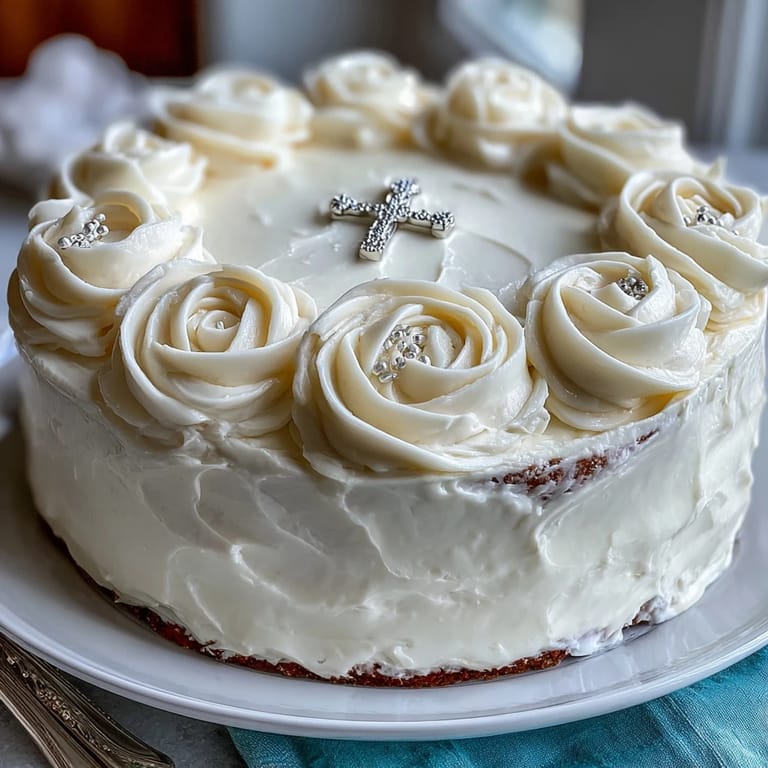
- Place your white roses and leaves on the buttercream surface of the cake, pressing them gently so they stay in place. Add edible pearls or silver dragees around the roses to catch light and add elegance.
- Crown the cake with the cross:
- Position the cross topper at the center or wherever it feels most meaningful, making sure it's secure but not so deep that it damages the cake. This final touch transforms the cake into something that celebrates the occasion.
- Chill before serving:
- Place the finished cake in the refrigerator until it's time to serve so the frosting stays firm and the fondant holds its shape. A chilled cake also slices more cleanly.
 Pin It
 The moment that little girl saw her cake at the party, with the white roses arranged like a real bouquet and the cross gleaming at the center, was worth every minute I'd spent shaping fondant petals. She was too delicate to dig right in, wanting to admire it first, and her mom teared up a little—that's when I understood why this cake matters beyond the taste.
Making Fondant Roses Feel Less Intimidating
The first time I tried fondant roses, I watched a YouTube video on repeat and still messed up the first three attempts. My hands felt clumsy, and I kept thinking the petals looked sad and wrinkled instead of elegant. But then I realized that slightly imperfect roses actually look more like real flowers than perfect, symmetrical ones—nature isn't precision, and neither should your cake decorations be.
Timing and Make-Ahead Strategies
You can bake the cake layers up to three days ahead and store them wrapped tightly in plastic wrap, then frost and decorate the morning of the event. The buttercream can be made a day early and kept in a covered container at room temperature, and fondant roses can be crafted the day before and stored in an airtight container in a cool place. This flexibility is what makes this cake work for people with actual lives and unpredictable schedules.
Flavor Variations and Personal Touches
While vanilla is traditional and elegant for a First Communion cake, you could add almond extract for a subtle nod to almond cake traditions, or a light touch of lemon zest to brighten the flavor without changing the white aesthetic. Some families love adding a hint of lavender to the buttercream, while others prefer keeping it simple so nothing competes with the delicate vanilla and the visual beauty of the white roses.
- Lemon zest in the sponge brightens the flavor and pairs beautifully with the vanilla buttercream without any visible color change.
- If you're short on time, you can skip the fondant roses and use white chocolate curls, edible flowers like white peonies, or even white amaryllis buds for a different look.
- A touch of almond extract—just ½ teaspoon—adds depth to the vanilla without making the cake taste like something other than vanilla cake.
 Pin It
 Baking a First Communion cake is really about showing up for someone's milestone moment, and this recipe gives you the foundation to do that beautifully. Whether your roses are perfectly shaped or a little rustic, the cake will taste tender and vanilla-sweet, and that's what matters.
Recipe Questions & Answers
- → How do I make moist vanilla sponge layers?
Use room-temperature eggs and butter, cream butter and sugar well, and alternate adding flour and milk to maintain moisture and tenderness.
- → What is the best way to achieve smooth buttercream frosting?
Beat softened butter until creamy before gradually adding sifted powdered sugar and vanilla, adjusting milk quantity for spreadable consistency.
- → How are the fondant roses shaped for decoration?
Roll small fondant balls, flatten into thin petals, then carefully assemble petals layer by layer into rose shapes.
- → Can I substitute ingredients for dietary needs?
Yes, half the butter in the sponge can be replaced with vegetable oil for lighter texture; gluten-free flour blend works for gluten restrictions.
- → How do I ensure the cake holds its shape when layering?
Level cake layers if needed, apply a crumb coat of buttercream and chill before adding the final smooth layer to stabilize the cake.