 Pin It
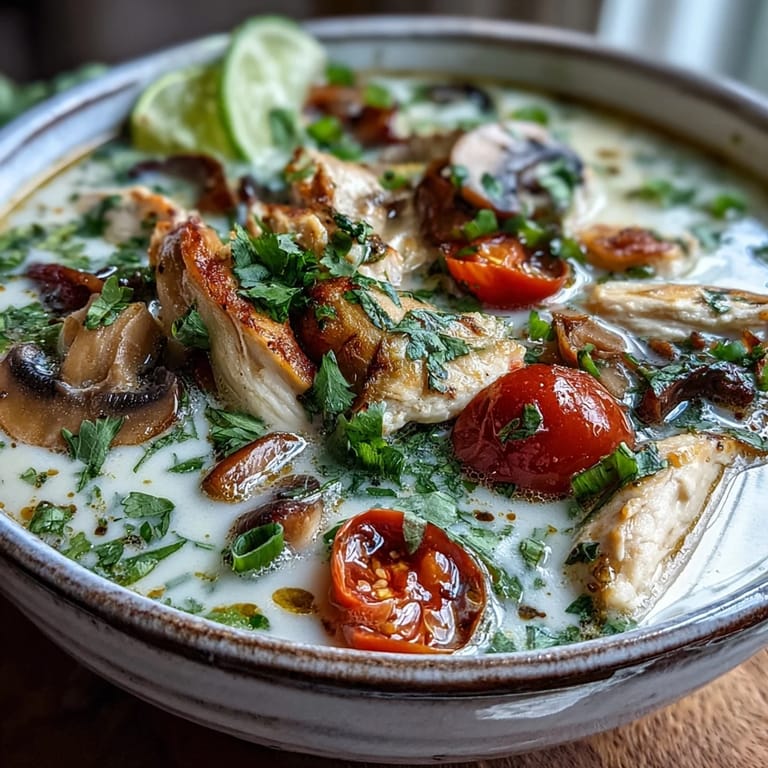
 My neighbor Thai came over on a rainy Tuesday evening, and within five minutes of stepping into my kitchen, she'd wrinkled her nose at my store-bought curry paste with such gentle disapproval that I knew I had to learn her way. Tom Kha Gai became my redemption project—that silky, aromatic soup that tastes like you've been simmering it for hours when really you've only used forty minutes and a handful of pantry staples. The first spoonful convinced me that sometimes the simplest dishes teach you the most about balance and restraint.
I made this soup for my sister when she came home exhausted from her new job, and watching her shoulders relax with that first spoonful felt like the best compliment I could get. She asked for the recipe before she'd even finished the bowl, and now it's her go-to when she needs to feel better or impress someone. There's something about a steaming bowl of Tom Kha that feels both comforting and special, which is exactly what cooking for people should be about.
Ingredients
- Boneless, skinless chicken breast (400 g): Slice it thin so it cooks through in minutes and absorbs all that fragrant broth; I learned to partially freeze it for easier slicing.
- Chicken stock (800 ml): Use good quality stock because it's the foundation—weak broth makes weak soup, no shortcuts here.
- Full-fat coconut milk (400 ml): Never skip the fat; it's what gives the soup that luxurious mouthfeel and authentic flavor.
- Lemongrass stalks (2): Smash them with the side of your knife so they release those intoxicating oils—this step takes thirty seconds and changes everything.
- Kaffir lime leaves (4): Torn slightly so they infuse the broth without floating around as whole leaves that get stuck in your teeth.
- Galangal (3 slices): It looks like ginger's spicier cousin and tastes peppery and complex; if you can't find it, fresh ginger works but use a bit less.
- Thai bird's eye chilies (3): Crush them rather than slice to release the heat gradually; you control the spice level here, so taste as you go.
- Garlic and shallots (4 cloves and 4 shallots): Smash and slice respectively to let them perfume the broth without overpowering it.
- Oyster or white mushrooms (200 g): Slice them uniformly so they cook at the same rate and don't turn to mush.
- Cherry tomatoes (100 g): Halving them lets them soften into the soup while still holding their shape.
- Fish sauce (2 ½ tbsp): This is non-negotiable for authentic flavor; it might smell funky in the bottle, but trust the process.
- Fresh lime juice (1 ½ tbsp): Always juice it fresh; bottled lime juice tastes flat by comparison.
- Palm sugar (1 tsp): It rounds out the flavors with a subtle sweetness that regular sugar can't quite match.
Tired of Takeout? 🥡
Get 10 meals you can make faster than delivery arrives. Seriously.
One email. No spam. Unsubscribe anytime.
Instructions
- Build your flavor base:
- Pour the chicken stock into a large saucepan and bring it to a gentle boil, then add the lemongrass, kaffir lime leaves, galangal, chilies, garlic, and shallots all at once. Let them bubble softly for five minutes while your kitchen fills with this incredible aroma that makes you forget you're cooking on a weeknight.
- Cook the chicken:
- Slide the thinly sliced chicken into the broth and reduce the heat so it's just simmering—you're not making chicken soup, you're poaching it gently for five to seven minutes until the pieces turn opaque and cooked through. If the broth is boiling too hard, the chicken will toughen up and the aromatics will lose their delicate flavor.
- Add the coconut cream:
- Pour in the full-fat coconut milk slowly, stirring gently as you go, then add the mushrooms and tomatoes right after. Keep the heat low and let everything simmer together for another five minutes so the flavors marry without the soup ever coming to a rolling boil.
- Season to taste:
- Stir in the fish sauce, lime juice, palm sugar, and salt, then taste it before you do anything else. This is where you adjust—more fish sauce if it needs depth, more lime if it needs brightness, more chili if you want more heat.
- Clean it up:
- Remove the lemongrass, kaffir lime leaves, galangal, and garlic pieces with a slotted spoon if you prefer a cleaner presentation, though some people like leaving them in for extra flavor.
- Serve and celebrate:
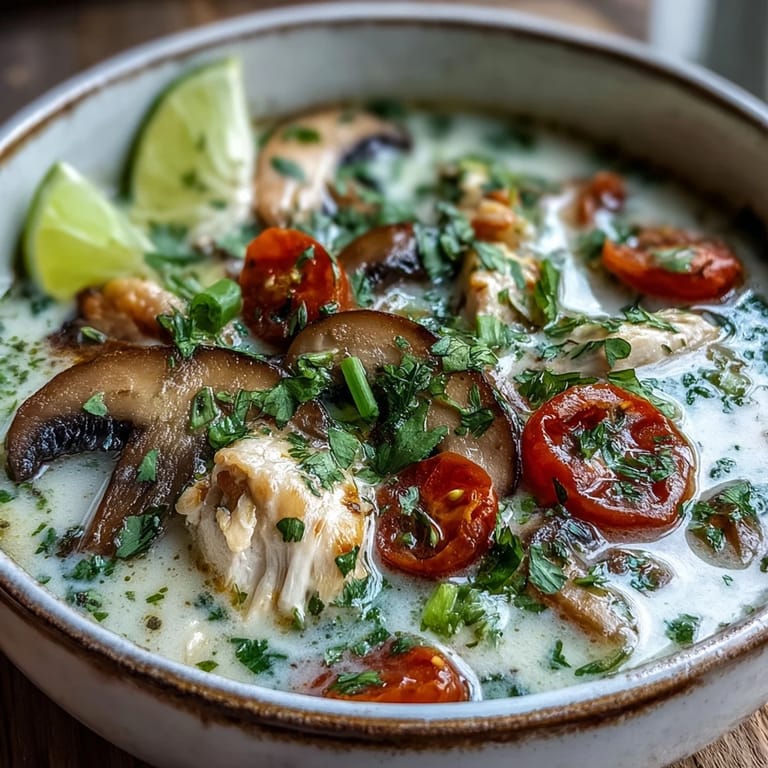
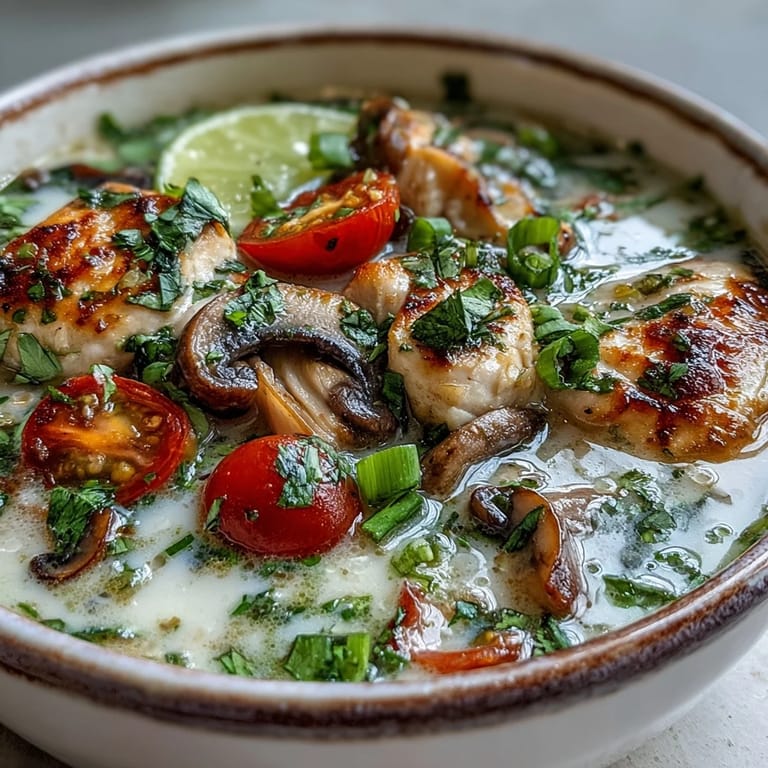
- Ladle the soup into bowls and scatter cilantro, green onions, and a lime wedge on top, then sit down and take that first spoonful before it cools.
 Pin It
 There's a moment in cooking when ingredients stop being individual things and become a single experience, and that's what Tom Kha Gai does around the four-minute mark. The first time you taste it at that point and realize you've created something restaurant-quality in your own kitchen, you understand why people crave this soup.
The Magic of Fresh Aromatics
I used to buy pre-minced garlic and thought I was saving time, but once I started smashing fresh garlic for this soup, I realized how much flavor I'd been missing. Those aromatics—the lemongrass, galangal, lime leaves, and chilies—aren't just ingredients; they're the entire reason this soup tastes authentic. They fill your kitchen with such a distinctive smell that you'll find yourself making this soup just to experience that moment again.
Customizing Your Heat Level
The first time I made this for my sister-in-law, I forgot to ask about her spice tolerance and used all three chilies at full strength. She was brave about it, but I learned that lesson fast—now I start with one crushed chili and keep the others nearby so people can adjust. The beauty of adding heat gradually is that everyone at the table gets exactly what they want, and nobody's tears ruining the moment.
Serving and Storage Wisdom
This soup is best served immediately while the aromatics are still fresh and the broth is piping hot. Leftovers keep for three days in the refrigerator, and you can reheat gently without losing the delicate balance of flavors. If you're serving with jasmine rice, cook it separately so the soup stays creamy and clean-tasting rather than rice-logged.
- Save a squeeze of fresh lime for serving time—a last-minute squeeze brightens everything up.
- Have extra cilantro and sliced green onions on the table so people can garnish to their preference.
- If you're making this for a crowd, you can prep all the aromatics hours ahead; just don't start cooking until you're ready to serve.
 Pin It
 Tom Kha Gai is one of those dishes that reminds you why cooking matters—it's fast enough for a busy weeknight but impressive enough to serve when you want to feel proud of what you've made. Once you nail this recipe, you'll find yourself making it over and over because it's the kind of soup that tastes like care in a bowl.
Recipe Questions & Answers
- → Can I substitute galangal with ginger?
Yes, fresh ginger works as a substitute for galangal, though galangal has a more citrusy and sharp flavor. Use the same amount of ginger if galangal is unavailable.
- → What can I use instead of kaffir lime leaves?
If kaffir lime leaves are unavailable, use fresh lime zest as an alternative. Add it towards the end of cooking to preserve the bright citrus flavor.
- → How do I make this vegetarian?
Replace chicken with firm tofu, use vegetable broth instead of chicken stock, and substitute fish sauce with soy sauce or tamari for a plant-based version.
- → Can I make Tom Kha Gai ahead of time?
Yes, you can prepare it up to 2 days ahead. Store in the refrigerator and gently reheat without boiling. Add fresh garnishes just before serving for best flavor and presentation.
- → Why shouldn't the soup boil after adding coconut milk?
Boiling coconut milk can cause it to separate and become grainy. Keep it at a gentle simmer to maintain the smooth, creamy texture that makes Tom Kha Gai so luxurious.
- → What type of mushrooms work best?
Oyster mushrooms are traditional, but white button, cremini, or shiitake mushrooms all work well. Slice them evenly for consistent cooking and texture.