 Pin It
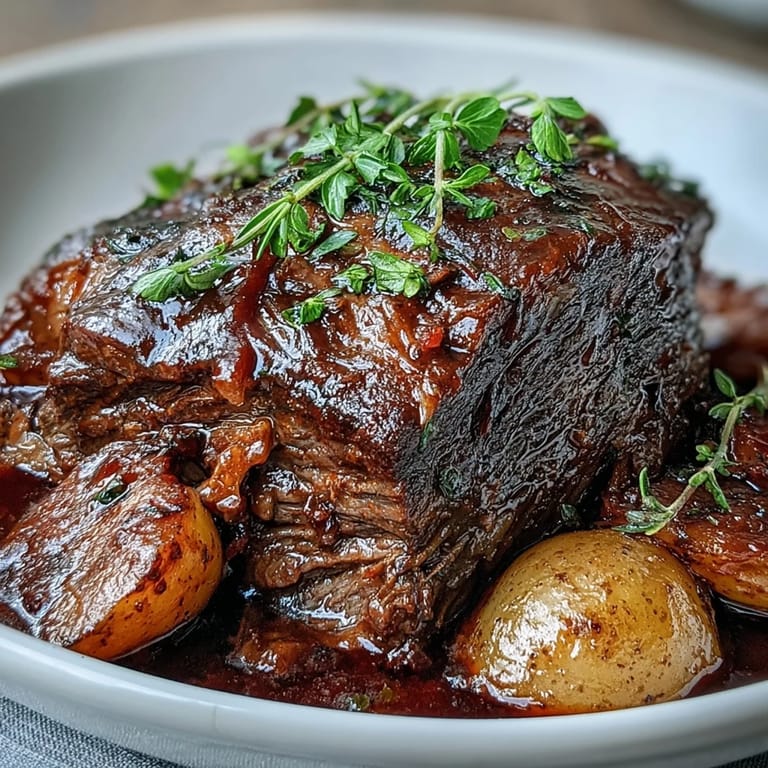
 The first snowfall was just starting to stick when my grandmother walked me through making this pot roast. She taught me that the real magic happens in that hour when the house fills with the scent of browning beef and red wine, making everyone drift toward the kitchen. Now every time I make this recipe, I think about how something so simple can transform a winter afternoon into pure comfort. The way the beef falls apart at the mere suggestion of a fork still feels like a small miracle.
I made this for a friend recovering from surgery, and she sent me a text two days later asking for the recipe. Her husband had apparently been sneaking leftover cold slices straight from the refrigerator in the middle of the night. There is something about this dish that makes people feel taken care of, like a blanket you can eat.
Ingredients
- 3-3.5 lb beef chuck roast: The marbling in chuck roast melts into the meat during braising, creating those tender, succulent strands that make pot roast legendary.
- Kosher salt and black pepper: Do not be shy with seasoning; a generous coating helps create that gorgeous crust during searing.
- All-purpose flour: This creates a light coating that helps the beef brown beautifully and contributes to a velvety gravy.
- Olive oil and butter: The combination gives you a high smoke point for searing plus that nutty richness only butter provides.
- Large yellow onion: Thick wedges hold their shape during long cooking, becoming sweet and melt-in-your-mouth soft.
- Garlic cloves: Smashed cloves release their oils more freely, infusing the braising liquid with mellow sweetness.
- Carrots, celery, and baby potatoes: These classic vegetables absorb all the flavorful cooking liquid, becoming the best part of the dish for many people.
- Tomato paste: Concentrated umami that deepens the color and adds subtle sweetness to the gravy.
- Dry red wine: The acidity cuts through the rich beef while adding complexity; any drinkable red works beautifully.
- Low-sodium beef broth: Using low-sodium broth lets you control the salt level while building layers of savory flavor.
- Fresh rosemary, thyme, and bay leaves: These herbs perfume the entire dish without overwhelming the natural beef flavor.
- Worcestershire sauce: A secret ingredient that adds an indescribable depth and slight tang to the gravy.
Tired of Takeout? 🥡
Get 10 meals you can make faster than delivery arrives. Seriously.
One email. No spam. Unsubscribe anytime.
Instructions
- Sear the beef to golden perfection:
- Pat the roast thoroughly dry with paper towels and season generously with salt and pepper. Dust lightly with flour, shaking off any excess. Heat 2 tablespoons oil and the butter in your heavy pot until shimmering. Sear the roast for 4 to 5 minutes per side until deeply browned, getting the edges too. Transfer to a plate and leave those precious browned bits behind.
- Build the flavor foundation:
- Reduce the heat to medium and add the remaining oil if needed. Toss in the onion wedges and cook for 3 to 4 minutes until they soften and turn golden. Add the garlic and stir for just 30 to 60 seconds until you can smell it. Stir in the tomato paste and let it cook for 1 to 2 minutes until it darkens and smells almost caramelized.
- Deglaze and assemble:
- Pour in the red wine and use your wooden spoon to scrape up every bit of browned goodness from the bottom. Simmer for 2 to 3 minutes until slightly reduced. Add the beef broth and Worcestershire sauce. Tuck in the rosemary, thyme, and bay leaves. Return the beef and any juices to the pot, settling it into the liquid which should reach halfway up the meat.
- Braise to tenderness:
- Bring everything to a gentle simmer over medium heat. Cover tightly with a heavy lid and reduce the heat to low, or slide the whole pot into a 300 degree oven. Cook for 1.5 hours, then flip the roast over. Add the carrots, celery, and potatoes around the meat, nestling them into the liquid. Cover again and cook for another 1.5 to 2 hours until the beef yields easily to a fork and the vegetables are soft but still holding their shape.
- Finish and serve:
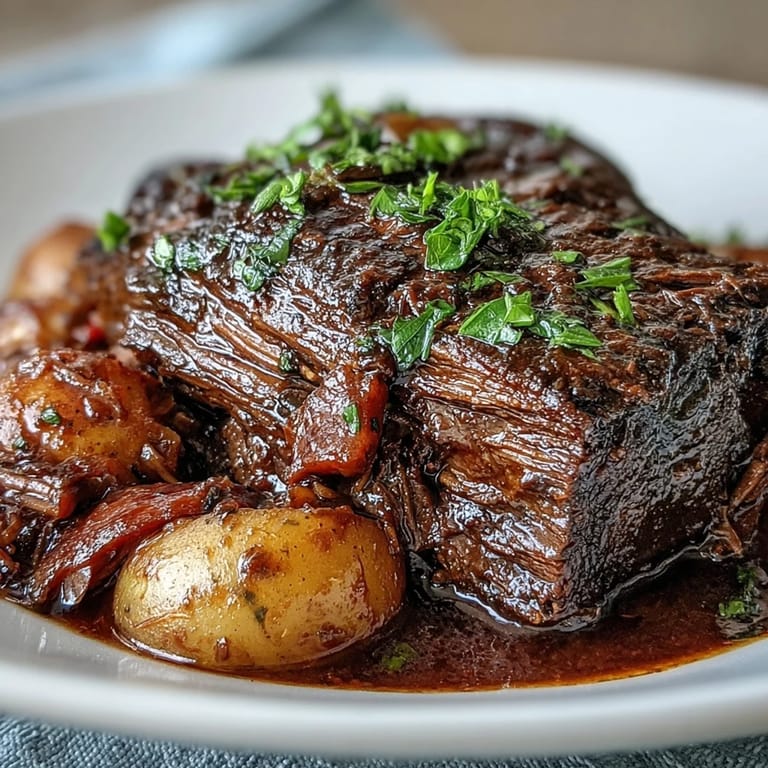
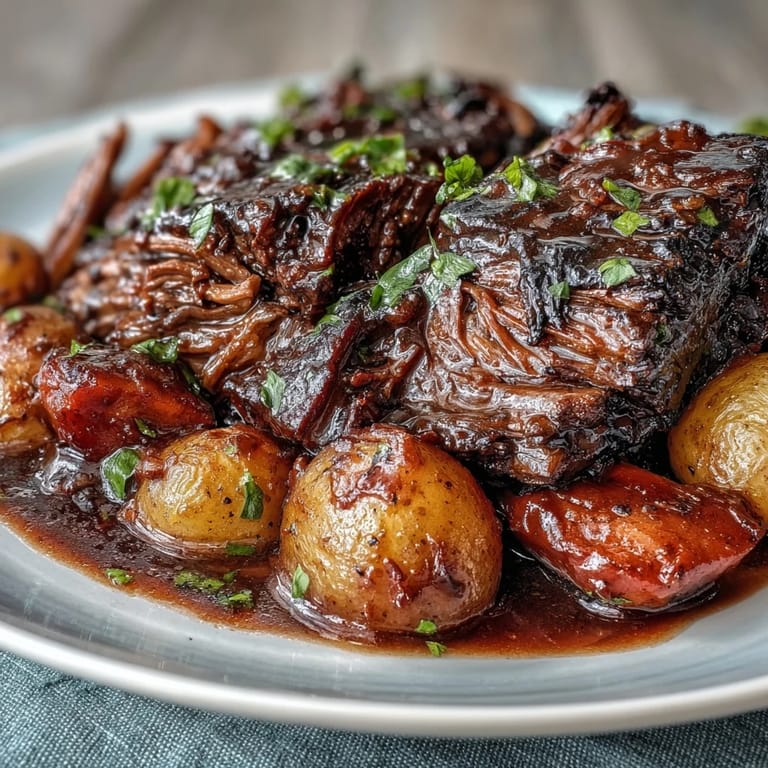
- Lift the roast and vegetables onto a warm platter and tent loosely with foil. Skim any excess fat from the surface of the liquid. For a thicker gravy, bring the liquid to a simmer and stir in the cornstarch mixture. Cook for 2 to 3 minutes until it coats the back of a spoon. Discard the herb stems and bay leaves. Shred or slice the beef against the grain and return it to the pot or arrange over the vegetables. Spoon that glorious sauce over everything and garnish with fresh parsley if you like.
 Pin It
 My sister once called me in a panic because she had invited her new in-laws for dinner and burned the roast. I talked her through making this recipe instead, and she now requests it for every family gathering. There is something about the way the entire house smells when this is cooking that makes people feel welcome before they even see the food.
Making It Your Way
I have learned that pot roast is beautifully forgiving. Sometimes I add parsnips for their subtle sweetness, or throw in whole pearl onions when I want something fancy. A splash of balsamic vinegar in the braising liquid adds a wonderful depth that nobody can quite identify but everyone notices. Trust your instincts and use what looks fresh at the market.
Getting That Perfect Gravy
The secret to restaurant-quality gravy lies in patience. Let the liquid reduce slightly while you skim the fat, and taste it before adding the cornstarch. Some days the liquid has cooked down enough to need a splash more broth, other days it is perfectly concentrated. I always keep a little extra broth warm on the back burner just in case.
Timing Your Perfect Pot Roast
Start this recipe at least 4 hours before you plan to eat. The hands-on time is short, but the long, slow braise cannot be rushed. I like to do my searing in the morning and let it cook while I run errands or work at home. The beef becomes more tender with every extra hour it cooks, so do not stress about exact timing.
- Set out your butter or cream for mashed potatoes about an hour before serving.
- A simple green salad with bright vinaigrette balances all the richness beautifully.
- Crusty bread for sopping up that incredible gravy is non-negotiable.
 Pin It
 There is something deeply satisfying about a dish that rewards patience with such incredible flavor. I hope this pot roast becomes one of those recipes you turn to again and again, making memories in your own kitchen.
Recipe Questions & Answers
- → What cut of beef works best for pot roast?
Chuck roast or blade roast are ideal choices because they contain plenty of connective tissue and marbling. As the meat slow-cooks, this collagen breaks down into gelatin, creating incredibly tender, succulent beef that falls apart easily.
- → Can I make this in a slow cooker?
Absolutely. After searing the beef and sautéing the aromatics on the stovetop, transfer everything to your slow cooker. Cook on low for 8–10 hours or high for 5–6 hours, adding the vegetables halfway through cooking if you prefer them to hold their shape better.
- → Why is searing the meat important?
Searing creates a deep, flavorful brown crust through the Maillard reaction, which adds complexity and depth to the final dish. Those browned bits left in the pot after searing also dissolve into the braising liquid, contributing rich flavor to the gravy.
- → What can I substitute for red wine?
For a non-alcoholic version, simply replace the wine with additional beef broth. You can also use balsamic vinegar or grape juice mixed with a tablespoon of vinegar for acidity, though the flavor profile will change slightly.
- → How do I know when the pot roast is done?
The beef is ready when it's fork-tender and easily pulls apart with minimal resistance. This typically takes 3–4 hours of braising. The vegetables should be soft but not falling apart, and the internal temperature of the meat should reach around 205°F for optimal tenderness.
- → Can I prepare this ahead of time?
Yes, pot roast actually benefits from being made a day ahead. The flavors deepen as it rests, and the fat solidifies on top for easy removal. Reheat gently on the stovetop or in a 325°F oven until warmed through, adding a splash of broth if needed.