 Pin It
 The first time my neighbor brought over a container of tom kha, I was skeptical about how coconut and chicken could work together so seamlessly. One spoonful and I was converted, the warmth of galangal and the brightness of lime hitting me all at once in a way that made me forget every cream-based soup I'd ever made. I spent weeks trying to recreate it before realizing the magic was in the slow infusion, not rushing anything. Now I make it whenever I want to feel transported, or when someone needs comfort that tastes like it traveled halfway around the world to find them.
I made this for my sister during a particularly gray February when she'd just moved back to town, and watching her face as she tasted it felt like the whole winter shifted. She kept asking what was in it, not because something was wrong, but because she couldn't believe something this comforting could taste so alive and bright. We ended up sitting with our bowls for two hours, talking and drinking the broth like it was tea. That's when I knew this wasn't just a recipe—it was a conversation starter, a moment maker.
Ingredients
- Chicken breast or thighs: Thighs are more forgiving and stay juicier, but breast works if you slice it thin and don't overcook it—the key is slicing against the grain so it stays tender in the simmering broth.
- Coconut cream: This is the soul of the soup; don't use lite versions as they lack the velvety body that makes tom kha feel luxurious.
- Chicken stock: Use good quality—it's a supporting player but makes the whole broth taste cleaner and brighter.
- Lemongrass: Trim the tough outer layers and bruise the stalks to release the oils; this step is what makes the broth smell like Thailand.
- Galangal: It's sharper and more peppery than ginger, so don't skip it if you can find it fresh; it adds a complexity that ginger alone can't match.
- Kaffir lime leaves: These tear easily and release their fragrant oils into the broth as it simmers; they're worth seeking out in Asian markets.
- Mushrooms: Button mushrooms are reliable, but cremini or even oyster mushrooms add earthiness that pairs beautifully with the coconut.
- Thai bird's eye chilies: Smash them rather than slice to let the heat infuse gradually; you can always add more but can't take it back.
- Fish sauce: This is the seasoning backbone—use it sparingly at first, as it's powerful and umami-forward.
- Lime juice: Fresh lime is non-negotiable here; it's the final brightness that ties everything together.
Tired of Takeout? 🥡
Get 10 meals you can make faster than delivery arrives. Seriously.
One email. No spam. Unsubscribe anytime.
Instructions
- Build your aromatics:
- Pour coconut cream and chicken stock into a large saucepan and add lemongrass, galangal, kaffir lime leaves, shallots, garlic, and chilies. Let them get to know each other over medium heat, watching until the edges start to steam.
- Infuse slowly:
- Simmer for 10 minutes without rushing—this is where the magic happens, as the woody notes of lemongrass and the peppery warmth of galangal dissolve into the liquid and create depth that no shortcut can replicate.
- Add protein and vegetables:
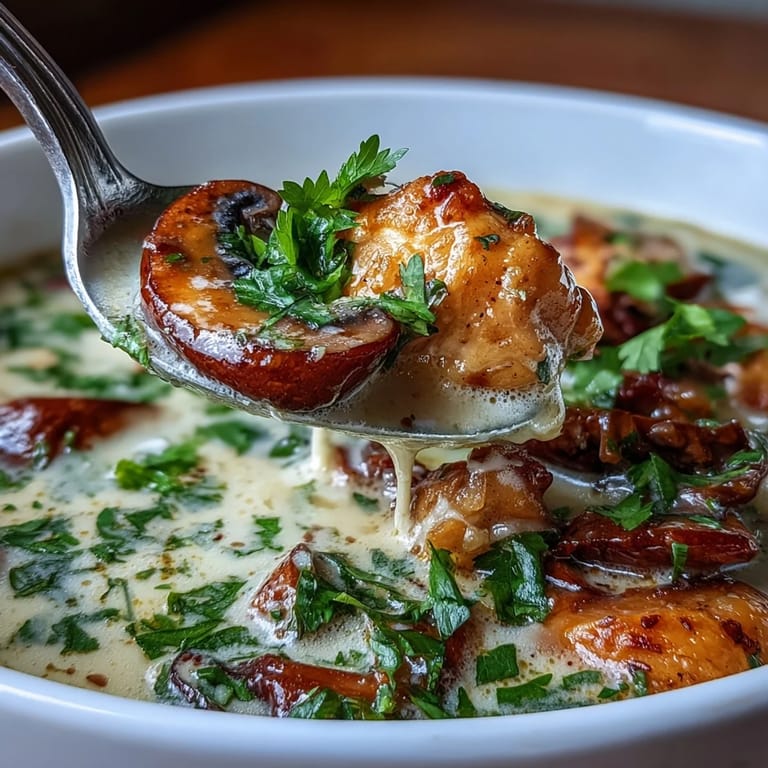
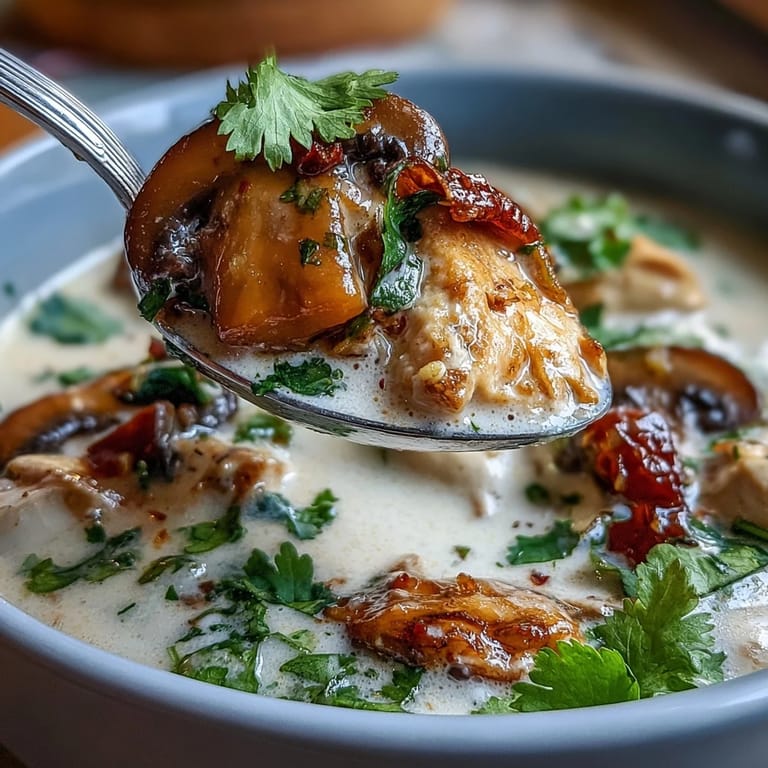
- Drop in your sliced chicken and mushrooms, keeping the heat at a gentle simmer so the chicken cooks through in 8–10 minutes without toughening up.
- Strain out solids:
- Fish out the lemongrass stalks, galangal slices, and lime leaves—they've given all they have to give and leaving them in will only make the broth bitter.
- Season to taste:
- Add fish sauce, lime juice, sugar, and salt, then pause and taste—this is your moment to balance the heat, the richness, and the brightness until it feels like home.
- Serve with intention:
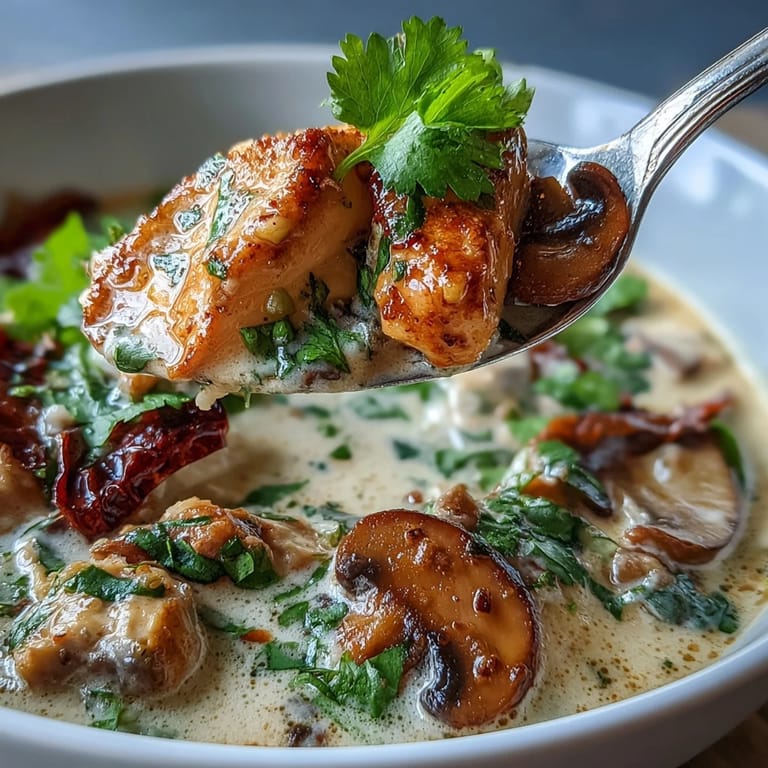
- Ladle into bowls, scatter cilantro on top, and pass lime wedges so everyone can adjust the brightness to their liking.
 Pin It
 Years later, I realized this soup became my go-to for moments when I needed to feed someone but also feed myself a little tenderness. There's something about the ritual of bruising the lemongrass and tearing the lime leaves that slows you down, and by the time you're ladling it out, you've already given the day a gentler shape.
Why the Aromatics Matter So Much
This soup lives or dies by its aromatics, and I learned this the hard way when I once tried to save time by skipping the initial infusion. The broth was flat, one-dimensional, and tasted expensive in all the wrong ways. When I went back to the method and let those stalks and slices sit in the heat for their full 10 minutes, the transformation was immediate—suddenly the broth had layers, stories, a sense of place. Aromatics aren't garnish here; they're the foundation, and they deserve your patience.
Protein Swaps and Variations
I've made this soup with everything from prawns to tofu, and each version opens up a different conversation with the broth. Tofu soaks up the coconut and spice beautifully and is perfect when you want something lighter or vegetarian. Prawns add a briny sweetness that shifts the whole tone. Even leftover rotisserie chicken works in a pinch, though fresh sliced chicken really is the classic for a reason—it cooks gently into the broth rather than dominating it.
Serving Suggestions and Storage
Serve this soup with jasmine rice on the side so you can eat a spoonful of soup followed by a bite of fragrant rice, a rhythm that feels complete and satisfying. The soup keeps beautifully in the fridge for three days and actually tastes better the next day once the flavors have had time to meld further. You can freeze the broth without the chicken and mushrooms, then thaw and reheat, adding fresh protein and vegetables on the day you want to eat it.
- Lime wedges on the table let everyone customize the brightness to their own taste.
- A small bowl of extra chili on the side means heat-seekers can turn up the volume without affecting the whole pot.
- Fresh cilantro scattered on top right before serving keeps its brightness rather than wilting into the heat.
 Pin It
 This soup has become my small rebellion against the idea that good food needs to be complicated or stressful to make. It's proof that taking your time with simple steps and quality ingredients creates something that feels profound without demanding any performance.
Recipe Questions & Answers
- → Can I substitute galangal with ginger?
Yes, fresh ginger works as a substitute if galangal is unavailable. Use about 1 tablespoon of sliced ginger, though the flavor will be slightly different as galangal has a more citrusy, pine-like taste compared to ginger's spiciness.
- → How do I make this vegetarian?
Replace chicken with firm tofu and use vegetable stock instead of chicken stock. Substitute fish sauce with soy sauce or tamari for a similar umami depth. The cooking time remains the same.
- → What's the difference between coconut cream and coconut milk?
Coconut cream is thicker and richer with higher fat content, creating a more luxurious texture. Coconut milk is lighter and more liquid. Either works well in this soup, though coconut cream provides a more authentic, velvety consistency.
- → Can I prepare this soup in advance?
Yes, Tom Kha Soup stores well in the refrigerator for up to 3 days. The flavors actually deepen overnight. Reheat gently over low heat and add fresh lime juice and cilantro just before serving for the brightest flavor.
- → Where can I find kaffir lime leaves and lemongrass?
Look for fresh kaffir lime leaves and lemongrass in Asian grocery stores. Many regular supermarkets now stock them in the produce or international sections. Frozen versions work well too, and dried kaffir lime leaves can be substituted in a pinch, though fresh is preferred.
- → How spicy is this soup?
The heat level is adjustable. Using 2-3 smashed Thai bird's eye chilies provides moderate spice. For mild soup, reduce to 1 chili or omit entirely. The smashing releases flavor without excessive heat, and removing them before serving further controls spiciness.