 Pin It
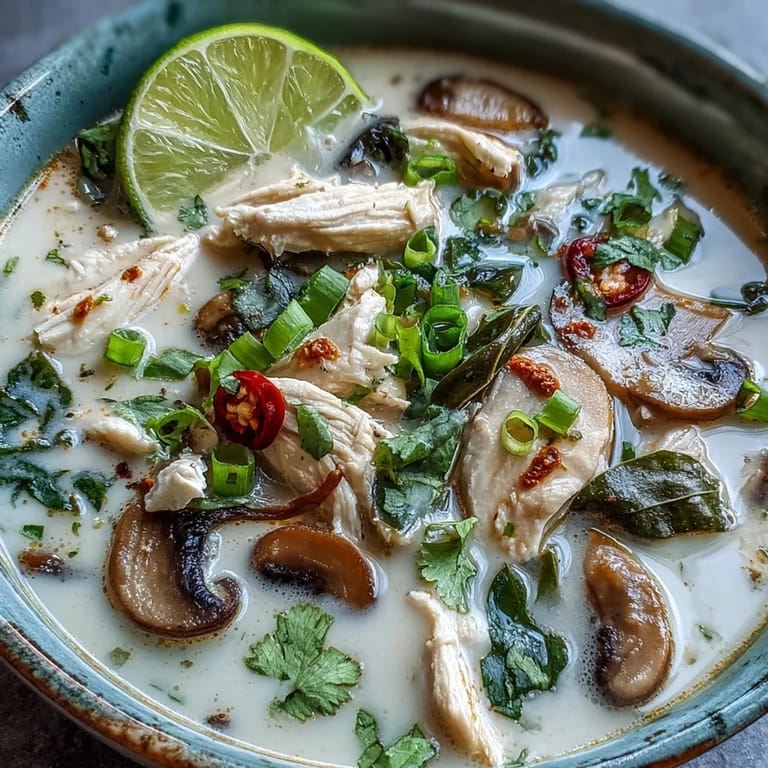
 My first encounter with Tom Kha Gai wasn't in a restaurant but in a cramped Bangkok apartment kitchen, where my friend's mother moved around her stovetop with the kind of efficiency that only comes from making something a thousand times before. She barely looked at measurements, just grabbed handfuls of lemongrass and lime leaves like she was conducting an orchestra, and suddenly the entire space smelled like nothing I'd ever experienced—floral, bright, warming all at once. That soup taught me that some dishes don't just fill your belly; they reorganize how your senses work together. Now whenever I make it, I'm chasing that exact moment when the coconut milk first hits the fragrant broth and transforms everything.
I made this soup for my partner on a gray February afternoon when we'd both had the kind of day that makes you want to disappear into a bowl of something healing. The apartment was cold, the light was flat, and then suddenly there was this pool of golden broth with steam rising off it, and everything shifted. We sat at the kitchen table in complete silence for the first few minutes, just eating, and didn't need to talk about anything else that day. That's when I realized this soup does something beyond nourishment.
Ingredients
- Chicken broth (3 cups): Use homemade if you have it—the soup only gets better with a richer base, though good quality store-bought works just fine when life gets busy.
- Lemongrass stalk: Smash it hard before adding to really release those oils; this is where half the magic lives, so don't skip or rush this step.
- Fresh galangal (4 slices): This is the soul of Tom Kha—it tastes like ginger's more sophisticated cousin, slightly medicinal and floral; if you absolutely can't find it, ginger works but the dish loses something essential.
- Makrut lime leaves (4 leaves): Tear them by hand so they release more flavor; these are non-negotiable for authentic taste, worth a trip to an Asian market.
- Thai bird's eye chilies (3): Lightly crush them to control the heat release; remember that the warmth builds as the soup sits, so start conservative and adjust at the end.
- Boneless, skinless chicken thighs (1 lb): Thighs stay tender and flavorful where chicken breast would turn dry; slice them thin so they cook quickly and evenly.
- Full-fat coconut milk (14 oz): Don't use lite—you need that richness to balance the brightness; shake the can well before opening.
- Fresh mushrooms (5 oz): Straw mushrooms are traditional and delicate, but cremini work beautifully and are easier to find; slice them the same thickness as your chicken.
- Medium shallot: Slice it thin so it softens into the broth without overpowering anything; shallots add a gentle sweetness that's crucial to the balance.
- Fish sauce (2 tbsp): This is the backbone of flavor, not meant to taste fishy but to deepen everything; it's worth buying a decent brand.
- Lime juice (1 tbsp plus more): Squeeze it fresh—bottled lime juice tastes flat and thin in comparison, and acidity is what keeps this soup bright.
- Palm sugar (1 tsp): It dissolves smoother than regular sugar and adds a subtle molasses note; brown sugar is your backup if you don't have it.
- Fresh cilantro and green onions: Save these for the finish—they add a fresh spark that lifts the entire bowl right before you eat it.
Tired of Takeout? 🥡
Get 10 meals you can make faster than delivery arrives. Seriously.
One email. No spam. Unsubscribe anytime.
Instructions
- Build your aromatic base:
- Pour the broth into a medium pot and turn the heat to medium. Smash that lemongrass stalk with the side of your knife until it cracks open and releases its oils, then add it to the pot along with the galangal slices, torn lime leaves, and crushed chilies. Let this simmer gently for 5 to 7 minutes—you'll see the broth transform from clear to slightly golden and the whole kitchen will smell incredible.
- Cook the chicken gently:
- Add your thinly sliced chicken thighs and the shallot to the simmering broth. Give it a gentle stir and watch as the chicken turns from pink to opaque, which takes about 3 to 4 minutes—don't rush this or the chicken will toughen up on you.
- Introduce the coconut milk:
- Add the mushrooms next, then slowly pour in the coconut milk while stirring gently. Bring everything back to a gentle simmer—this is important because aggressive boiling will break the emulsion and make the soup look separated and sad.
- Season to perfection:
- Add the fish sauce, palm sugar, and fresh lime juice. Taste it now and adjust—you're looking for that elusive balance where you taste salt, sour, and sweet equally, none overpowering the others. This is the step where your palate becomes the recipe.
- Rest and finish:
- Remove the pot from heat and let it sit for a minute. If you prefer a cleaner presentation, fish out the lemongrass stalk, galangal slices, and larger pieces of lime leaf, though many people leave them in for extra flavor.
- Serve with intention:
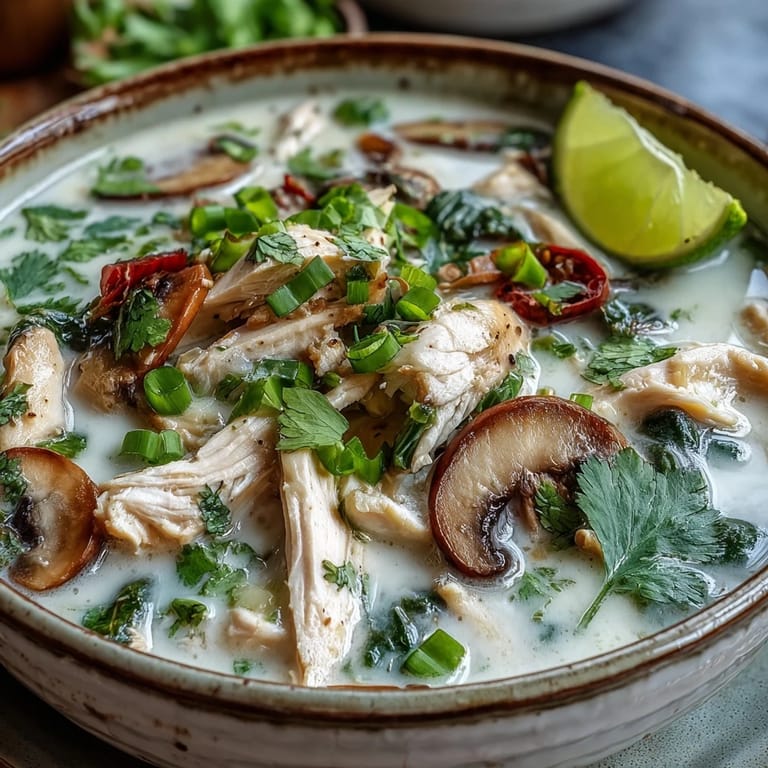
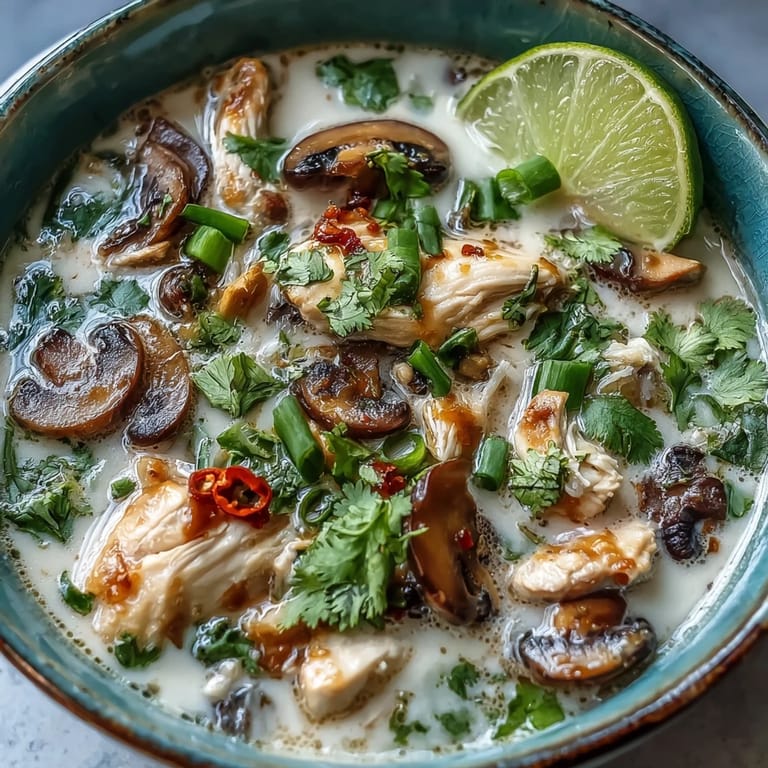
- Ladle the soup into bowls and top with fresh cilantro and sliced green onions—the fresh herbs are what wake up your mouth after each spoonful. Set lime wedges on the side so people can squeeze more acidity in if they want.
 Pin It
 My neighbor once told me she made this soup after her surgery recovery, and it was the first thing that made her feel like living again. I didn't quite understand until I saw her sitting on her front steps with a bowl, tears streaming down her face, not from pain but from the sheer comfort of something warm and fragrant and perfectly balanced. That's when a recipe stops being instructions and becomes a small act of care.
The Art of Balance in Thai Cooking
Thai cuisine is built on four pillars—salty, sour, sweet, and spicy—and Tom Kha Gai is the perfect classroom for learning how they interact. The fish sauce brings salt, the lime brings sour, the palm sugar brings sweet, and the chilies bring heat, but they're not supposed to be separate; they're supposed to blur together into something that tastes like none of those things individually. I learned this by making the soup badly about fifteen times, adding too much of one element and then overcompensating with another, until finally I understood that it's not about following numbers—it's about tasting and trusting your own judgment.
Choosing Your Proteins Wisely
Chicken thighs versus chicken breast is one of those decisions that sounds small but changes everything about the final result. The thighs have more fat and connective tissue, which means they stay tender and flavorful instead of becoming rubbery little sad things. If you want to make this vegetarian, tofu works beautifully—silken tofu if you want it to dissolve slightly into the broth and firm tofu if you want it to hold its shape. Some people add prawns or a combination of proteins, and honestly, whatever you choose will work as long as you respect the cooking times and don't overcook anything.
Making It Yours
The most interesting Tom Kha Gai I ever had included a handful of wild mushrooms someone had foraged, fresh turmeric instead of galangal, and a splash of coconut cream swirled in at the very end. It taught me that recipes are more like suggestions than rules, and the ones that matter most are the ones you're willing to adapt and make your own over time. This soup can handle additions and substitutions as long as you keep the core flavors intact—that balance of creamy, tangy, aromatic, and warm. Here are some ideas to explore:
- Add a can of baby corn or bamboo shoots for extra texture and a lighter vegetable component.
- Stir in a spoonful of red curry paste at the beginning for deeper complexity and more heat.
- Finish with a splash of coconut cream on top for an extra luxurious presentation.
 Pin It
 Tom Kha Gai is the kind of soup that becomes better each time you make it, the kind where your hands start to know when things are right before your brain catches up. Make it, taste it, adjust it, and then make it again.
Recipe Questions & Answers
- → Can I substitute galangal with ginger?
Yes, fresh ginger can be used as a substitute, though galangal has a more citrusy, pine-like flavor that's essential for authentic taste. Use the same amount and seek galangal at Asian markets for the best results.
- → What type of coconut milk works best?
Full-fat, unsweetened coconut milk is essential for the creamy, rich texture. Avoid light versions as they lack the body and richness that characterizes this soup.
- → How spicy is Tom Kha Gai?
The heat level is customizable. Three Thai bird's eye chilies provide moderate warmth. Reduce to one or two for milder heat, or increase for more intensity. The chilies are lightly crushed, not minced, so they infuse flavor without overwhelming spice.
- → Can this be made vegetarian?
Absolutely. Replace chicken with firm tofu, use vegetable broth instead of chicken broth, and substitute soy sauce or tamari for fish sauce. The aromatic profile remains intact and delicious.
- → Should I remove the aromatics before serving?
Lemongrass, galangal, and lime leaves are typically left in for presentation but aren't meant to be eaten. You can remove them before serving or instruct guests to eat around them.
- → What mushrooms work best?
Traditional straw mushrooms are ideal, but cremini or oyster mushrooms make excellent substitutes. Slice them evenly for consistent cooking and texture throughout the soup.