 Pin It
 Bangkok street vendors taught me that Tom Yum Gai isn't just soup—it's a conversation between heat, citrus, and fragrance that happens in a single bowl. I'd watched a woman in a white apron work her ladle with such ease, the broth shifting from pale gold to deep amber as she added paste and lime, and I realized this dish rewards patience more than precision. Years later, standing in my own kitchen at midnight with leftover chicken and a craving I couldn't ignore, I finally understood why she moved so calmly: the aromatics do most of the work for you.
My partner once said this soup smelled like a Bangkok night market had relocated to our stove, and honestly, they weren't wrong. I'd made it for friends who were skeptical about spicy food, and watching them go back for thirds while fanning their mouths and grinning made me realize Tom Yum Gai has this magical way of converting people. The heat isn't aggressive; it builds gently and plays beautifully with the lime and the earthiness of the mushrooms.
Ingredients
- Chicken breast or thighs (350 g / 12 oz), thinly sliced: Thighs stay juicier in the brief cooking time, but breast works if you slice it thin and don't leave it in the heat too long.
- Chicken stock (1.2 L / 5 cups): Use good quality stock; it's the foundation, and weak broth shows immediately in a soup this simple.
- Lemongrass (2 stalks), cut into 2-inch pieces and smashed: Smashing releases the oils—don't skip this step, and remove the tough outer leaves or they'll catch between your teeth.
- Kaffir lime leaves (5), torn: These give Tom Yum its signature brightness; fresh is worlds better than dried, but frozen works in a pinch.
- Galangal (3 slices), or fresh ginger as substitute: Galangal has a peppery, almost medicinal edge that ginger can't quite replicate, but ginger won't ruin anything if that's what you have.
- Thai birds eye chiles (2), smashed: Start with one if you're cautious—these little peppers pack genuine heat, and you can always add more at the table.
- Mushrooms (150 g / 5 oz), sliced: Oyster mushrooms absorb the broth beautifully and have a tender texture, but button mushrooms are reliable and always available.
- Tomatoes (2 medium), cut into wedges: Their acidity plays against the spice, so use something with actual flavor and firmness—not those pale supermarket tomatoes.
- Onion (1 small), sliced: Just enough to add sweetness and body without overwhelming the more delicate flavors.
- Nam prik pao (2 tbsp), Thai roasted chili paste: This is the secret ingredient that gives Tom Yum its depth; it's not the same as sriracha or sambal, so hunt it down if you can.
- Fish sauce (2 tbsp): Yes, it smells funky in the bottle, but trust it—it dissolves into the broth and creates an umami foundation you'll taste but won't identify.
- Sugar (1 tbsp): Balances the heat and sourness; don't skip it because you think soup shouldn't be sweet.
- Salt (1/2 tsp), adjusted to taste: Start conservative since fish sauce is already salty.
- Lime juice (2 tbsp freshly squeezed), plus extra for serving: Bottled lime juice tastes like regret—fresh is non-negotiable here.
- Fresh cilantro (2 tbsp), chopped: A green brightness that reminds you this is a living soup, not a heavy braise.
- Extra Thai chiles (1–2), sliced optional: For people who want to control their own heat level at the table.
Tired of Takeout? 🥡
Get 10 meals you can make faster than delivery arrives. Seriously.
One email. No spam. Unsubscribe anytime.
Instructions
- Build the fragrant base:
- Bring your chicken stock to a gentle boil in a large saucepan—not a rolling boil that will make everything turbid. Drop in the smashed lemongrass, torn kaffir lime leaves, galangal slices, and smashed chiles, then let them bubble away for five minutes while the kitchen fills with that unmistakable aromatherapy.
- Cook the chicken gently:
- Add your thinly sliced chicken and let it simmer for three to four minutes, just until the color changes from pink to opaque throughout. Skim away any foam that floats to the surface—this isn't mandatory, but it gives you a cleaner, more elegant broth.
- Add vegetables with intention:
- Toss in the mushrooms, tomato wedges, and sliced onion, then simmer for another three to four minutes until the vegetables are tender but still have personality. This is where the soup stops being just broth and becomes something you can actually sink a spoon into.
- Season boldly:
- Stir in the nam prik pao, fish sauce, sugar, and salt, then let everything merge together for two more minutes. The paste will swirl and bloom in the hot broth, deepening its color and flavor.
- Finish with brightness:
- Remove the pot from heat and stir in your fresh lime juice—the heat will be gentler on the citrus, preserving its clarity. Taste and adjust: need more sour, add lime; need more salt, add fish sauce; too spicy, add a splash more broth.
- Serve with ceremony:
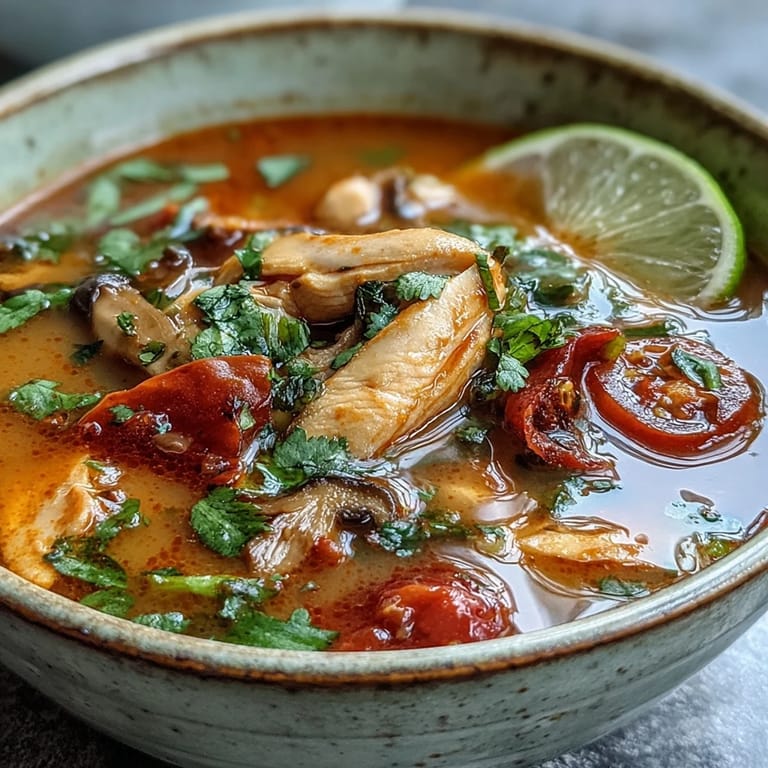
- Ladle into bowls, scatter cilantro and extra chiles across the top if you're feeling generous, and place a lime wedge on the side so people can tune it to their preference.
 Pin It
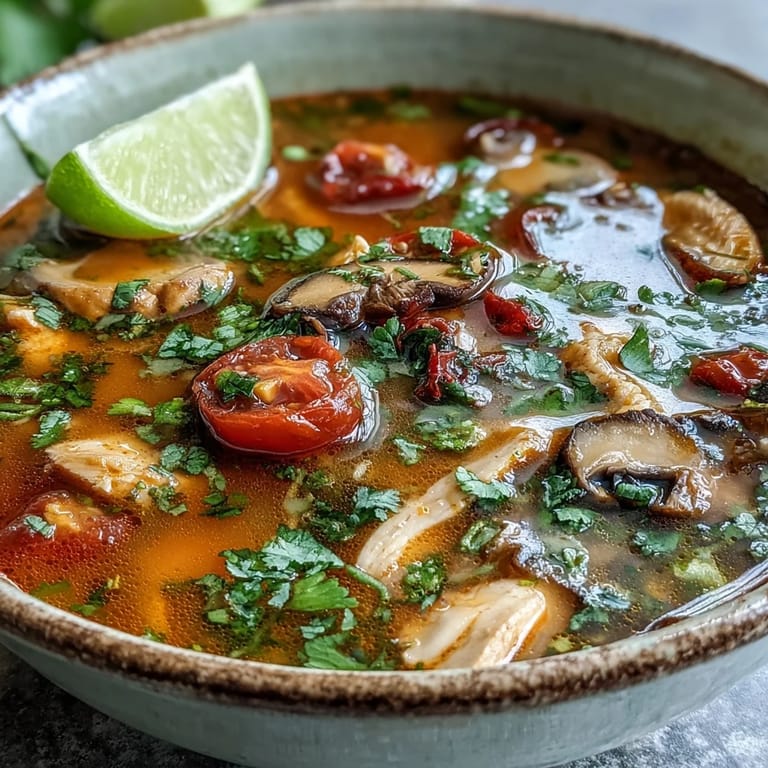
 There's a moment, right after you've added the lime juice and lifted the spoon, when the soup smells ready in a way that makes you stop and just breathe it in. That's when you know you've got it right—when the heat and sour and aromatic have found their balance. It's also the moment my kitchen feels less like a room in my apartment and more like a place where something true is happening.
The Power of Timing
Tom Yum Gai depends entirely on not overthinking it—every component comes together in the pot in a specific order, and that order matters. The initial infusion of aromatics without the chicken means they can release their oils and flavor fully into the broth. Once the chicken is added, the clock is ticking, not because you're in a rush, but because you're respecting how quickly delicate proteins cook through in liquid. The vegetables arrive last so they stay distinct, crisp-edged, something your teeth can actually feel rather than mushy background players.
Customizing Heat and Sour Balance
This soup is a negotiation between your taste buds and the ingredients, and you get to be the one holding the pen. Some days you'll add the chiles and realize you wanted more fire, so you've got extra sliced ones right there at the table—no shame in that. Other times the lime will sing out so bright you'll want to pull back just slightly, adding a touch more fish sauce or sugar to mellow it. The recipe is the skeleton, but your preferences are what actually make the soup.
Why This Soup Changed How I Cook
Making Tom Yum Gai taught me that simple ingredients, when treated with respect and timed correctly, don't need tricks or complicated techniques to taste extraordinary. It also proved that a soup could be elegant and casual at the same time—it feels fancy enough to serve to people you want to impress, but it's also the kind of thing you make at midnight when you're alone and craving something that feels alive. Every time I make it, I'm reminded that Thai cooking is about balance and intuition, not precision and measurement.
- Keep your lime at room temperature so it yields more juice when you squeeze it.
- If you can't find galangal, ginger works, but use a bit less because it's stronger.
- Leftover soup keeps in the fridge for two days, but make fresh broth if you're reheating because the aromatics will have given everything they have.
 Pin It
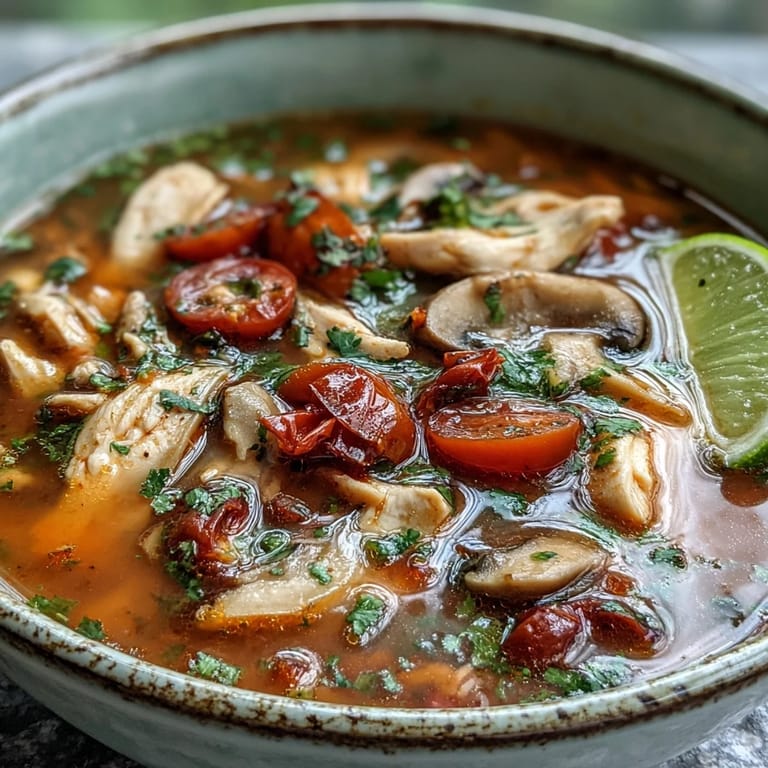
 This soup is the kind of cooking that reminds you why you light the stove in the first place. It's bright, it's alive, and it tastes like someone who knows exactly what they're doing put it together for you.
Recipe Questions & Answers
- → Can I make Tom Yum Gai less spicy?
Yes, simply reduce the number of Thai bird's eye chiles or remove the seeds before adding them. You can also omit them entirely and add chile slices as a garnish for those who prefer heat.
- → What can I substitute for galangal?
Fresh ginger works as a suitable substitute, though it has a slightly different flavor profile. Use the same quantity and preparation method as you would for galangal.
- → How do I store leftover Tom Yum Gai?
Store in an airtight container in the refrigerator for up to 3 days. Reheat gently on the stovetop and add fresh lime juice before serving, as the acidity diminishes over time.
- → Can I use shrimp instead of chicken?
Absolutely. Substitute peeled and deveined shrimp for the chicken to make Tom Yum Goong. Add the shrimp in step 2 and cook for 2-3 minutes until they turn pink and opaque.
- → Where can I find nam prik pao?
Nam prik pao is available at Asian grocery stores or online. Look for it in the Thai condiment section. Some brands may contain shrimp paste, so check labels if you have shellfish allergies.
- → Do I eat the lemongrass and galangal pieces?
No, these aromatics are added for flavor infusion only. They should be removed before eating or simply pushed aside in the bowl, as they are too fibrous and tough to consume.