 Pin It
 The first time I tasted authentic Tom Yum was in a cramped Bangkok kitchen where an elderly vendor stirred her pot with practiced, unhurried movements while the steam rose up and made her squint. That soup—spicy, sour, and alive with an almost electric brightness—changed how I thought about flavor balance. Now when I make it at home, I chase that same magic, that moment when your nose catches the first wave of lemongrass and galangal and you know something extraordinary is about to happen.
I made this soup for my partner on a Tuesday evening when neither of us had energy to think about dinner, and somehow it became the thing we kept asking for. There's something about the warmth and the citrus that cuts through exhaustion, and the way you can customize heat and sourness at the table means everyone gets exactly what they need. It became our comfort soup, strange as that sounds for something this boldly spiced.
Ingredients
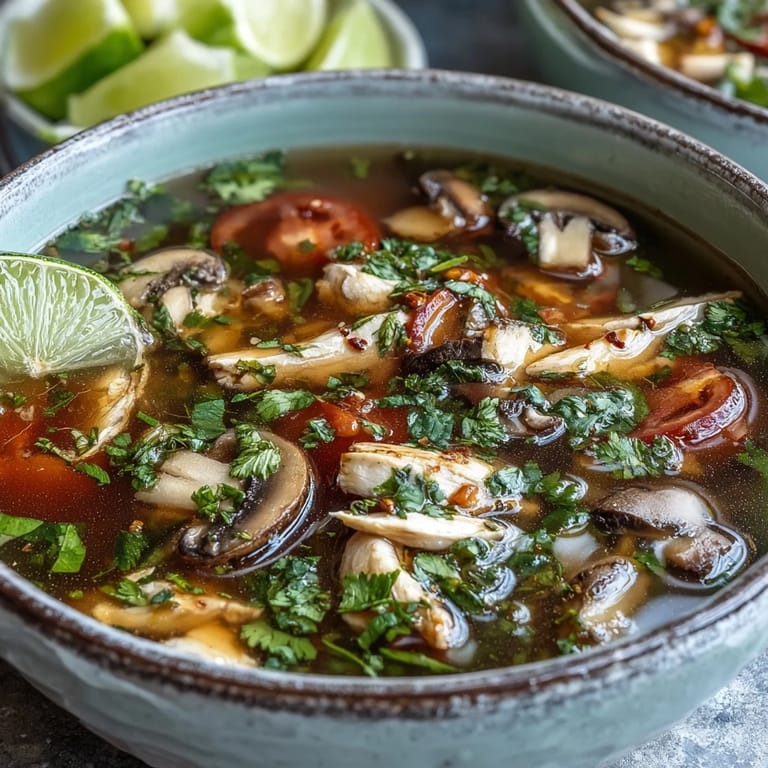
- Chicken thighs or breasts (400 g, thinly sliced): Thighs stay more tender in the broth, but breasts work fine if that's what you have—the real magic is in the aromatics anyway.
- Chicken stock (1.2 liters): Use homemade if you can; the cleaner the broth, the more the herbs sing through.
- Lemongrass (2 stalks): Smash it hard—bruising releases the oils that make your kitchen smell like a Thai market.
- Fresh galangal (4 slices) or dried (2 tsp): This root gives Tom Yum its distinctive warm, slightly piney note; don't skip it or substitute ginger.
- Makrut lime leaves (5, torn): Their floral bitterness is irreplaceable—find them frozen if fresh isn't available.
- Birds eye chilies (4, lightly crushed): Start with this amount and adjust; these are genuinely hot, not just warm.
- Mushrooms (150 g, sliced): Oyster mushrooms absorb flavor beautifully, but button mushrooms work in a pinch.
- Tomatoes (2 medium, in wedges): Cherry tomatoes burst into the broth more gracefully if you prefer drama over chunks.
- Onion (1 small, sliced) and garlic (3 cloves, smashed): These soften into the broth and vanish, leaving only their essence.
- Fish sauce (3 tbsp): This is what deepens the savory undertone; it smells funky raw but transforms once it cooks.
- Fresh lime juice (2 tbsp, plus more): Squeeze it right before adding so you capture that bright acidity.
- Sugar (1 tsp) and salt (½ tsp): These balance the sour and spicy so your mouth doesn't feel attacked.
- Fresh cilantro and spring onions: Add these at the very end so they stay herbaceous and don't wilt into the heat.
Tired of Takeout? 🥡
Get 10 meals you can make faster than delivery arrives. Seriously.
One email. No spam. Unsubscribe anytime.
Instructions
- Bruise Your Aromatics:
- Take the back of your knife and press down hard on the lemongrass, galangal, and lime leaves—you want to hear a small crack. This isn't aggressive; it's just waking them up so they release their essential oils into the broth.
- Build the Aromatic Broth:
- Bring your stock to a rolling boil, then add the bruised lemongrass, galangal, lime leaves, chilies, and garlic. Let this simmer uncovered for five minutes while you stand there and breathe in—this is when the soup becomes recognizable as Tom Yum.
- Introduce the Chicken:
- Add your thinly sliced chicken and onion to the simmering broth. Eight to ten minutes of gentle simmering is all you need; watch for white foam rising to the surface and skim it away gently. This keeps the broth clear and clean-tasting.
- Add the Vegetables:
- The mushrooms and tomato wedges go in last, cooking just five to seven minutes until tender. The vegetables should still have some integrity; you're not making mush.
- Season with Intent:
- This is where you become the chef. Add the fish sauce, lime juice, sugar, and salt, then taste. Adjust each element—more lime if it needs brightness, more salt if it feels thin, more fish sauce if it lacks depth. There's no single right answer; your palate is the guide here.
- Finish and Serve:
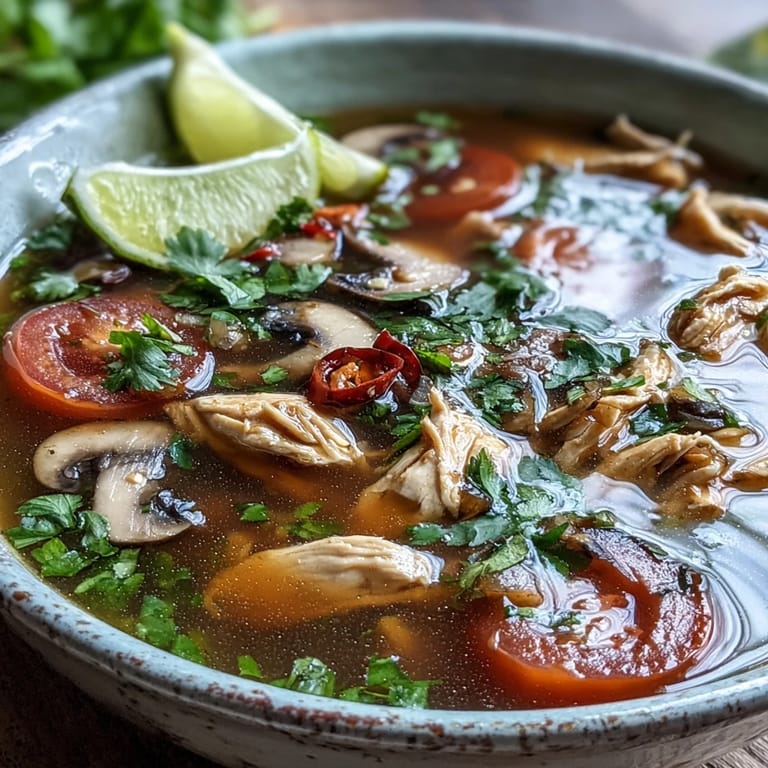
- If you prefer, fish out the lemongrass stalks, galangal slices, and lime leaves—they've given their gift. Ladle the soup into bowls and finish with bright cilantro, sliced spring onions, and lime wedges so people can adjust sourness themselves.
 Pin It
 There's a moment in every pot of Tom Yum, around the three-minute mark of the initial simmer, where the aroma shifts from sharp to rounded and suddenly you understand why people keep making this soup. It smells like intention, like care, like something that took time to develop. That's when I know it's going to be good.
The Art of Tasting and Adjusting
Thai cooking isn't about following a recipe so much as understanding the four forces at play—salty, sour, spicy, and sweet—and learning how they dance together. In Tom Yum, you're balancing fish sauce and lime against chili heat and a touch of sugar. Every broth is slightly different depending on your stock, the size of your limes, even the humidity in your kitchen, so tasting frequently and adjusting fearlessly is how you make it truly yours. This is where cooking becomes less mechanical and more intuitive.
Variations That Expand the Possibilities
Once you've made this version a few times, you'll notice how naturally it adapts. Shrimp transforms it into Tom Yum Goong in about 30 seconds—just swap the chicken and reduce cooking time to five minutes. A splash of coconut milk or evaporated milk near the end creates a creamier version that some people find more forgiving; it softens the spice without diluting the flavor. Serving it alongside jasmine rice isn't just tradition; it's practical wisdom, as the rice absorbs the broth and becomes part of the eating experience.
Sourcing and Substitutions
The non-negotiable ingredients here are lemongrass, galangal, makrut lime leaves, and quality fish sauce—these create Tom Yum's actual identity. Everything else has flexibility built in. If fresh galangal is impossible to find, dried works fine; if mushrooms aren't in the house, leafy greens or daikon radish slide in without complaint. The one thing I'd caution against is using regular lime leaves instead of makrut—they're genuinely different, and the makrut has a floral bitterness that's essential to the whole story.
- Check Asian markets or online suppliers for hard-to-find aromatics; they keep longer than you'd expect.
- Fish sauce quality varies wildly, so find one brand you like and stick with it.
- Fresh is better than dried for everything except galangal, where dried is actually quite reliable.
 Pin It
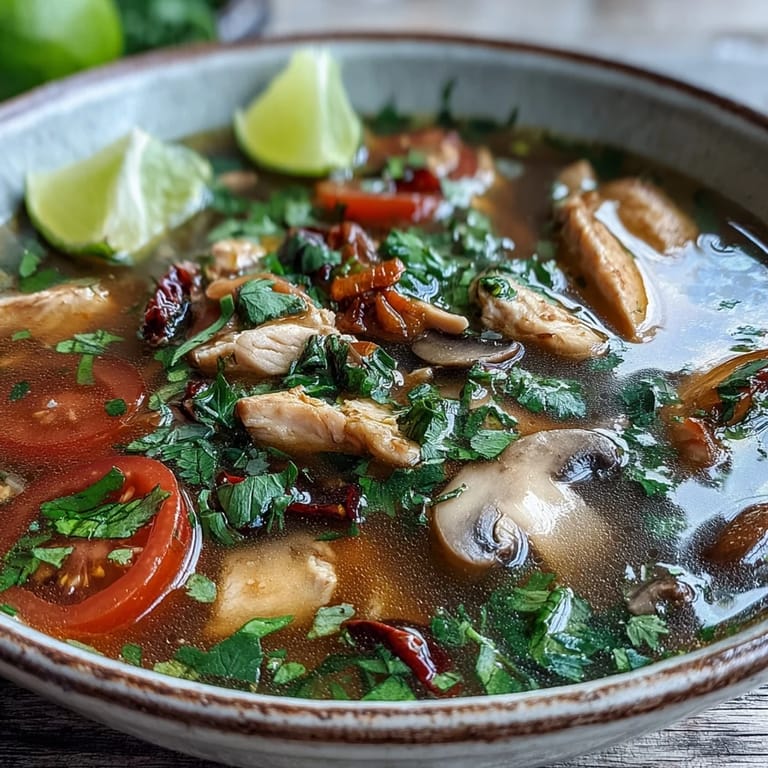
 Tom Yum teaches you that bold flavors and balance aren't opposed—they're partners. Once you understand this soup, you understand Thai cooking, and a whole world of flavor opens up. Make it, taste it carefully, and let your kitchen fill with that remarkable steam.
Recipe Questions & Answers
- → Can I use chicken breast instead of thighs?
Yes, boneless skinless chicken breasts work perfectly. Chicken thighs offer more flavor and stay tender, but breasts are a leaner option. Slice thinly for even cooking.
- → What can I substitute for galangal if I can't find it?
Fresh ginger is the closest substitute, though it has a slightly different flavor profile. Use the same amount as galangal. Dried galangal is also available at Asian markets.
- → How spicy is Tom Yum Chicken?
The heat level depends on the number of birds eye chilies used. Start with 2-3 chilies for mild heat, or use 5-6 for authentic spicy intensity. You can always adjust to your preference.
- → Can I make this soup ahead of time?
Yes, Tom Yum can be prepared up to 2 days ahead. Store in the refrigerator and reheat gently. Add fresh lime juice and herbs just before serving for the best flavor.
- → What type of mushrooms work best?
Oyster mushrooms are traditional and provide excellent texture. Button, cremini, or straw mushrooms are also suitable alternatives. Avoid strongly flavored mushrooms like shiitake.
- → Is Tom Yum Chicken keto-friendly?
Yes, this soup is naturally low in carbohydrates with only 9g per serving. It's high in protein and fits well within most keto and low-carb eating plans.