 Pin It
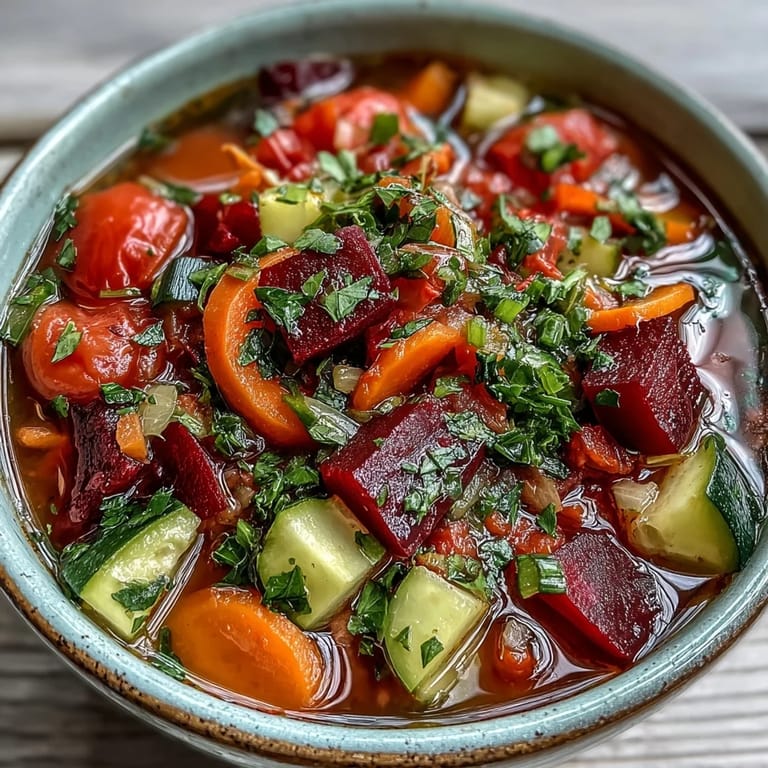
 There's something almost magical about watching a soup transform from a pile of raw vegetables into something that glows on the stovetop. I discovered this rainbow vegetable detox soup on a gray January morning when my kitchen felt too quiet and my body felt too sluggish, and I wanted something that tasted like spring even though snow was still on the ground. The moment those beets hit the hot oil, the whole pot turned this deep crimson that made me smile, and I knew this was exactly what I needed. What started as a simple way to use up vegetables from the farmers market became my go-to remedy whenever I need to reset, filling my kitchen with the kind of wholesome warmth that makes you feel genuinely cared for.
I made this for my sister during one of those afternoons when she arrived at my door looking overwhelmed by life, and by the time she finished her bowl, she was already asking for the recipe. There's something about feeding someone you love a soup this colorful that feels like you're giving them more than just nutrition, like you're saying I see you and I want you to feel better without actually having to say it out loud. She's made it at least twenty times since then, and now it's become the thing she brings to potlucks where everyone asks what's in the bright red broth.
Ingredients
- 1 medium beetroot, peeled and diced: Beets are the soul of this soup, giving it that jewel-toned color and a subtle earthiness that makes everything taste more sophisticated than it actually is.
- 2 medium carrots, peeled and sliced: They add natural sweetness and body to the broth, plus they're one of the most forgiving vegetables to cook because they're almost impossible to mess up.
- 1 medium courgette (zucchini), diced: Zucchini keeps things light and fresh without overpowering the other flavors, and it breaks down just enough to thicken the soup slightly.
- 2 medium tomatoes, chopped: Fresh tomatoes add acidity and brightness, though canned works just fine if you're making this in winter when tomatoes are sad.
- 1 green bell pepper, diced: This is what gives the soup that herbaceous undertone that makes people ask if you added something mysterious.
- 1 small red onion, finely chopped: Red onions are milder and sweeter than yellow ones, so they won't overpower the delicate balance of flavors.
- 2 cloves garlic, minced: Always use fresh garlic for this because it's what transforms the aromatics from pleasant to irresistible.
- 1.5 liters (6 cups) vegetable broth (low sodium): Low sodium is important here so you can control the seasoning and taste how each vegetable contributes its own flavor.
- 2 tbsp fresh parsley, chopped: Parsley is your friend because it brightens everything without being aggressive about it.
- 1 tbsp fresh dill, chopped: Dill sounds like an odd choice but it's what makes people tilt their head and wonder what's different about your soup.
- 1 tbsp fresh basil, chopped: Basil adds that garden-fresh note that reminds you that vegetables are actually beautiful when you treat them right.
- 1 tsp ground black pepper and 1 tsp sea salt: Don't skip the final seasoning adjustment because the difference between a good soup and an amazing one is literally just tasting and adjusting.
- 2 tbsp olive oil: Good olive oil makes a real difference here since it's one of the few fats in the whole pot.
- Juice of 1/2 lemon: Lemon juice is the thing that makes all the colors pop and prevents the soup from tasting flat.
Tired of Takeout? 🥡
Get 10 meals you can make faster than delivery arrives. Seriously.
One email. No spam. Unsubscribe anytime.
Instructions
- Heat your pot and start with the aromatics:
- Warm the olive oil in a large pot over medium heat, then add your red onion and garlic, stirring occasionally until everything becomes fragrant and soft around 2–3 minutes. You'll know it's ready when the garlic has lost its sharp edge and smells like pure comfort.
- Build with the heartier vegetables:
- Add the beetroot and carrots, stirring them into the hot oil and letting them cook for about 5 minutes until they start to soften at the edges. This step is important because it allows the vegetables to develop flavor rather than just steaming in the broth later.
- Add the delicate vegetables:
- Stir in the courgette, tomatoes, and green bell pepper, cooking for 3–4 minutes until everything is warmed through and starting to release its aromatics. The whole pot should smell garden-fresh at this point.
- Bring in the broth:
- Pour in your vegetable broth and bring the whole thing to a boil, which usually takes 5–7 minutes depending on how much heat you're using. Once you see those first big bubbles breaking the surface, reduce the heat to a gentle simmer.
- Let it simmer gently:
- Cover the pot and let it simmer for 20–25 minutes until all the vegetables are tender and the broth has absorbed all their flavors. The longer it simmers, the more the colors will deepen and the flavors will meld together.
- Finish with the fresh herbs and brightness:
- Stir in the parsley, dill, and basil along with the lemon juice, salt, and black pepper, then taste and adjust the seasoning until it tastes like exactly what you want. This is the moment where the soup goes from good to something that makes you close your eyes when you taste it.
- Serve and garnish:
- Ladle the soup into bowls and top with extra fresh herbs if you have them, which makes it feel like you spent way more time on it than you actually did.
 Pin It
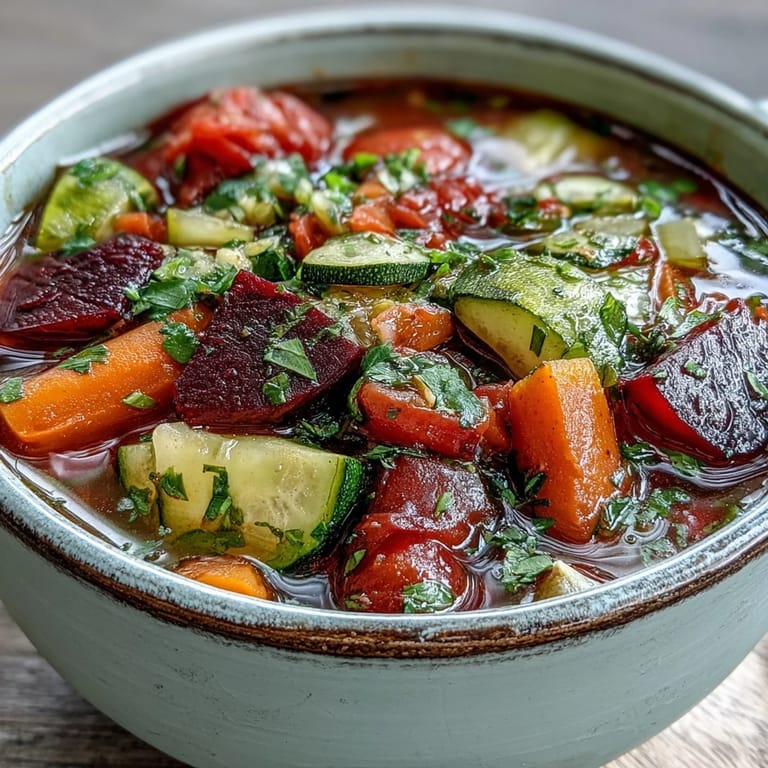
 What really got me about making this soup regularly is how it became the thing I make when I want to feel like I'm taking care of myself without it feeling like deprivation. That's when I realized that eating well doesn't have to taste like punishment, and a simple pot of colorful vegetables can actually taste like love.
The Secret of Layering Flavors
I learned something important about soup the day I added all the vegetables at once and ended up with mushy beets and barely-cooked carrots. Now I understand that sautéing the harder vegetables first gives them a head start so everything finishes at exactly the right moment, creating this perfect texture where nothing is either raw or destroyed. The onion and garlic sautéed at the beginning create this aromatic foundation that everything else builds on, making the whole soup taste more intentional and complex than it has any right to be given how simple it actually is.
Making This Soup Your Own
One of the best things about this soup is that it's flexible enough to work with whatever vegetables you have sitting in your crisper drawer right now. I've made it with purple cabbage when I was out of bell pepper, added white beans when I wanted it thicker, and once threw in a handful of spinach at the end because it was about to wilt anyway. The beautiful part is that no matter what you swap, the basic structure stays the same and you'll end up with something that tastes like home.
Serving and Storage Ideas
This soup is honestly better the next day after all the flavors have had time to know each other, so it's perfect for meal prep on lazy weekend mornings when you want to set yourself up for the week ahead. It keeps beautifully in the refrigerator for four days and freezes wonderfully for up to three months, which means you can make a huge batch and then have something nourishing waiting for you on those evenings when cooking feels impossible.
- Serve it with thick slices of toasted whole grain bread and you've got a meal that actually feels complete without being heavy.
- If you want to make it creamy without dairy, blend about a third of the soup and stir it back in for a velvety texture that's still totally vegan.
- A drizzle of really good olive oil and a scatter of fresh herbs right before serving makes it look fancy enough to serve to people you're trying to impress.
 Pin It
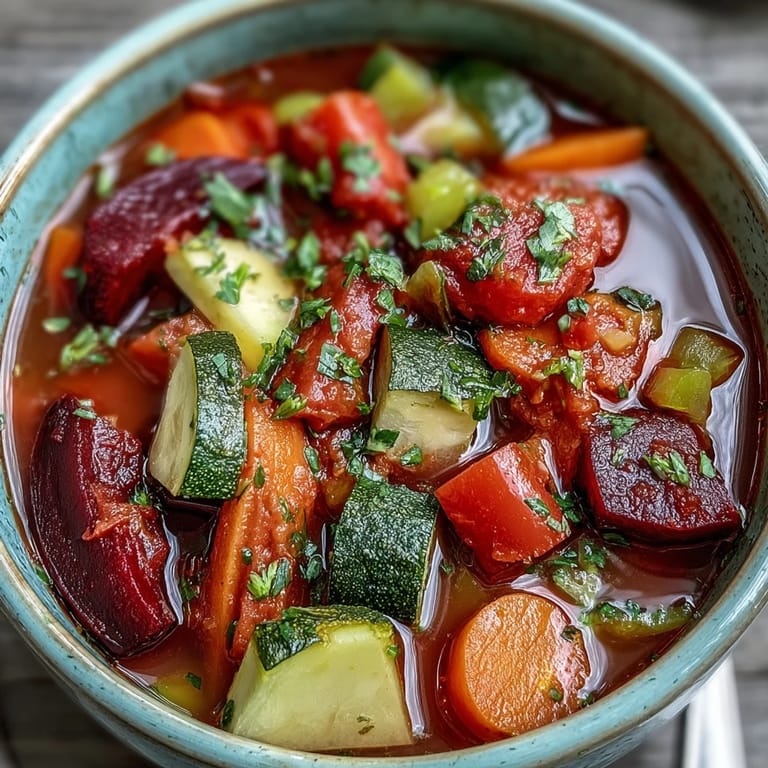
 This soup has become my answer to a lot of questions, the thing I make when I want to feel better, feed someone I love, or prove to myself that taking care of your body doesn't have to be boring. Make it once and you'll understand why it's become such a regular in my kitchen.
Recipe Questions & Answers
- → Can I make this soup ahead of time?
Yes, this soup actually tastes better the next day as flavors have time to meld. Store in an airtight container in the refrigerator for up to 4 days. Reheat gently on the stovetop, adding a splash of water or broth if needed to adjust consistency.
- → Is this soup suitable for freezing?
Absolutely. Let the soup cool completely, then transfer to freezer-safe containers leaving some space for expansion. It will keep well for up to 3 months. Thaw overnight in the refrigerator before reheating.
- → Can I use different vegetables?
Certainly. This versatile bowl works with whatever seasonal vegetables you have on hand. Try adding sweet potatoes, spinach, kale, or celery. The key is maintaining a colorful variety for both visual appeal and nutritional diversity.
- → How can I make this more filling?
Add cooked lentils, chickpeas, or white beans during the last 5 minutes of simmering. Serving with whole-grain bread, quinoa, or brown rice also transforms this into a more substantial meal while keeping it nutritious.
- → What's the best way to achieve a smoother texture?
Use an immersion blender to partially purée the mixture, leaving some vegetable chunks for texture. Alternatively, transfer about one-third to a blender, purée until smooth, then return to the pot. This creates a creamy consistency while maintaining the rainbow appeal.
- → Can I use dried herbs instead of fresh?
Yes, dried herbs work well when fresh aren't available. Use approximately half the amount called for in the original instructions. Add them earlier in the cooking process—along with the broth—to allow time for their flavors to develop and infuse the liquid.